
Editor’s Note (June 2026): This article has been updated to reflect current research, labeling regulations, and best practices for people with celiac disease and gluten-related disorders.
One of the most critical skills a person with celiac disease or gluten intolerance can master is label reading. In this article, I explain the current gluten-free labeling laws and how to decode if a product is gluten-free. This article applies to food labeling standards in the U.S. only. Please read my disclosures.
Three million people in the U.S. have celiac disease, a genetic autoimmune disease that damages the small intestine, an organ responsible for absorbing and distributing nutrients from food to every cell and organ in the body.
Another estimated millions of people report symptoms related to gluten ingestion despite testing negative for celiac disease. This condition is often referred to as non-celiac gluten sensitivity (NCGS), although researchers are still working to better understand its underlying mechanisms and causes.
Understanding gluten-free labeling laws is one of the most critical skills a gluten-free person can develop and master. There is much to learn, understand, and decipher when determining a product’s safety. It can be an overwhelming and frustrating experience regardless of whether someone is new to the gluten-free diet or has been gluten-free for decades.
In this article, I detail everything a person needs to know about the FDA’s gluten-free labeling guidelines, the difference between “gluten-free” and “certified gluten-free,” how to decode confusing “May Contain” statements, and which red-flag ingredients people with gluten disorders should avoid.
What the FDA Says About Gluten-Free Labeling
On August 2, 2013, the U.S. Food and Drug Administration (FDA) issued guidelines for food manufacturers to follow when making products they claim are “gluten-free.”
These guidelines help to not only define what “gluten-free” means but also set forth uniform standards that are “truthful” and “accurate” for people living with celiac disease.
While the FDA says these guidelines are voluntary and that food manufacturers must regulate themselves to ensure accurate claims, they offer much-needed protection for celiac disease and gluten-intolerant communities.
Below is a summary of what the FDA gluten-free guidelines say:
(1) A product labeled “gluten-free,” “no gluten,” “free of gluten,” or “without gluten” means that the product does not contain any gluten-containing grains (wheat, barley, rye) or any ingredients derived from gluten grains (i.e., wheat flour or barley malt).
Please note that oats are not considered a gluten-containing grain under FDA regulations. However, oats are frequently cross-contaminated with wheat, barley, and rye during cultivation and processing. For this reason, Consumers should look for oats that meet gluten-free standards and avoid conventional oats unless they have verified that the oats were sourced and processed to meet gluten-free requirements.
(2) A “gluten-free” labeled product must contain less than 20 parts per million (ppm) of gluten to include the “gluten-free” claim on its packaging. Concerned that the 20 ppm gluten threshold isn’t enough? Read: Is the FDA’s 20 ppm Gluten Threshold Enough?
Please note that the FDA does not require manufacturers to test a final product to ensure it contains less than 20 ppm of gluten. A food manufacturer can decide for itself how it will approach meeting the FDA’s guidelines. Some will test their final products; others will use other methods to determine if they meet FDA guidelines.
(3) If an ingredient derived from a gluten-containing grain has been processed to remove the gluten protein, such as wheat starch, it can be labeled “gluten-free” only if the final product verifiably contains less than 20 ppm of gluten.
(4) A food labeled “gluten-free” and whose label includes the term “wheat” in the ingredient list or bears a separate “contains wheat” statement (more on May Contain statements next) must also include clarifying language that explains that the wheat has been removed and that the final product contains less than 20 ppm of gluten.
Please note that the FDA guidelines cover all food and beverages except for meat and poultry, which are regulated by the USDA, and alcohol, which is regulated by the Alcohol and Tobacco Tax and Trade Bureau. (Read Answers to 11 Common Questions about Alcohol and the Gluten-Free Diet.)
Gluten-Free vs. Certified Gluten Free
A product can be labeled “gluten-free” if it meets the FDA-set criteria. However, many products take it a step further by becoming “certified gluten-free,” meaning a manufacturer has paid for a third-party certifying agency to verify the product is indeed gluten-free.
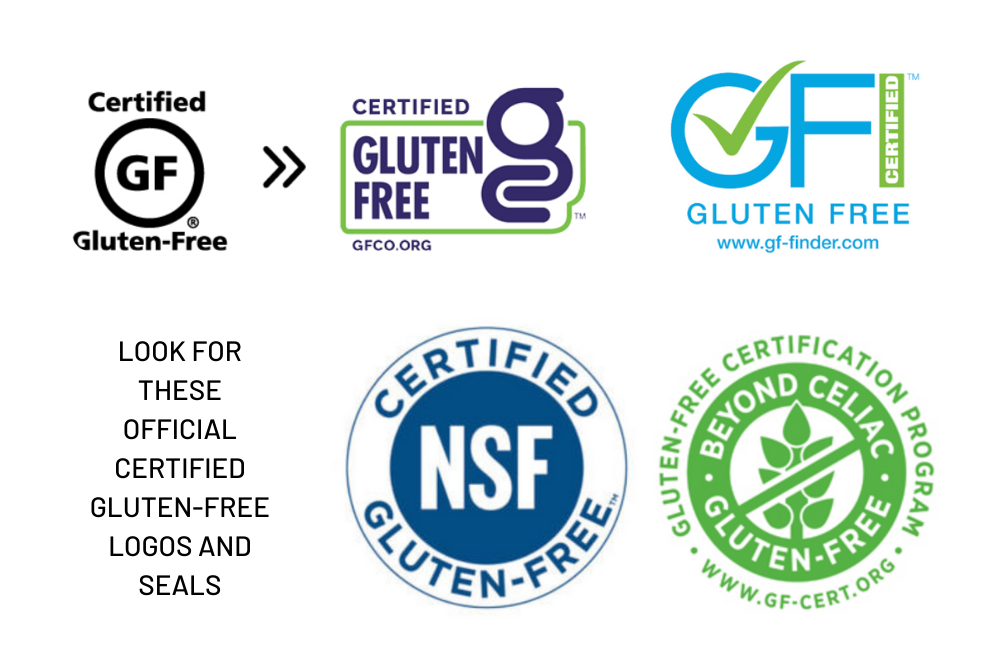
Certifying agencies include the most widely used certification agency, the Gluten-Free Certification Organization (GFCO), as well as certification programs from Beyond Celiac, The National Celiac Disease Association, and NSF International.
Many certification programs require standards that are stricter than the FDA’s less-than-20-ppm requirement and include additional auditing, ingredient review, supplier verification, and testing protocols.
Furthermore, it’s important to note that a certified gluten-free claim does not mean a product was manufactured on dedicated gluten-free equipment. Many certified gluten-free products are made on shared equipment also used to manufacture products that contain gluten and wheat.
However, gluten-free certifying agencies require the equipment to be sanitized between runs and, of course, require testing of the final product to ensure it’s gluten-free.
The following image shows the logos designed by the various gluten-free certifying agencies. In 2020, the GFCO created a more distinct logo, changing from the widely used GF in a circle to its current squiggly purple “g.” The agency did this because the circle logo was often mistaken as a generic gluten-free label.
While food manufacturers must pay for third-party certification, such labels offer manufacturers a good return on investment. Products that bear these logos instill consumer trust and confidence, making it easier for people following a gluten-free diet to shop for groceries and quickly identify safe products.
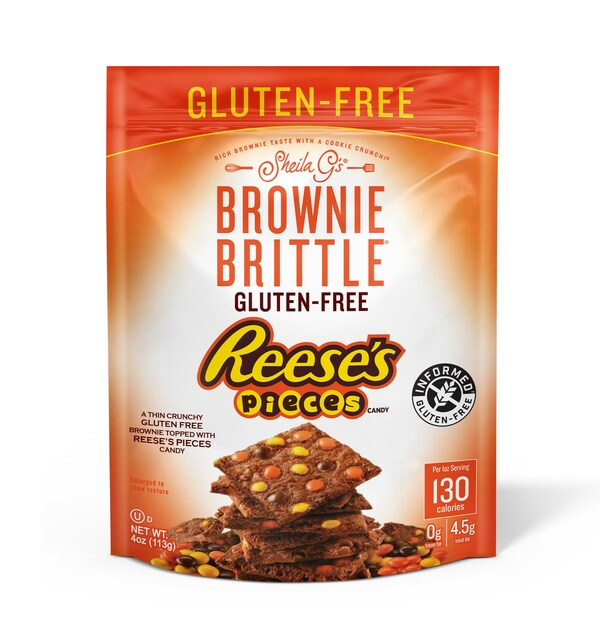
Emerging gluten-free certification programs are popping up all the time as the gluten-free industry grows. One such addition is the BRGCS’s Gluten-Free Certification Program (GFCP), which features a logo labeled “Informed Gluten-Free.” I first spotted this new certification logo on Shelia G’s Gluten-Free Brownie Brittle.
Decoding “May Contain” Statements
The Food Allergen Labeling and Consumer Protection Act of 2004 (FALCPA) requires food manufacturers to clearly disclose if their products contain any of the top eight food allergens, which include:
- Milk
- Eggs
- Fish
- Shellfish (crustaceans)
- Tree nuts
- Peanuts
- Wheat
- Soy
- Sesame (added in January 2023)
If, for example, a product contains food starch, and that food starch is derived from wheat, a company must list wheat in or below the ingredient label. An ingredient label could list “food starch (wheat)” in the ingredient list, or it could include a disclosure below the ingredient list stating, “Contains wheat.”
However, gluten-free consumers should beware of the following three pitfalls when relying on May Contain statements to sniff out gluten in a product.
Pitfall 1: While wheat is considered an allergen, gluten is not. This means products can be wheat-free but not gluten-free. Barley and rye are wheat-free, but they contain gluten.
Pitfall 2: May Contain statements never include oats, which can be highly cross-contaminated with wheat. Consumers should be cautious when buying products that contain oats unless the label specifies the product is “gluten-free” or “certified gluten-free.”
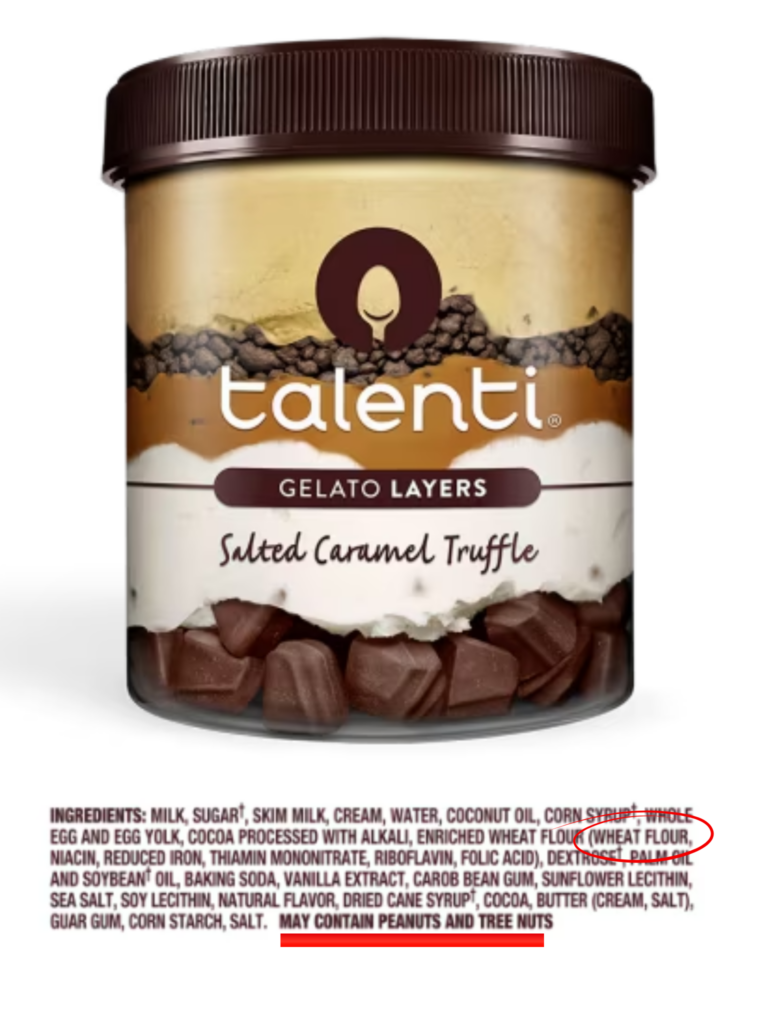
Pitfall 3: A “May Contain” statement may not include “wheat” in the disclosure statement below the ingredient listing, even when an ingredient label clearly lists wheat in the ingredient list. For example, in the Talenti gelato shown below, notice how wheat flour is listed in the ingredient list but not included in the May Contain statement.
Decoding Precautionary May Contain Statements
While a product may not intentionally contain one of the top allergens, food manufacturers sometimes include precautionary allergen statements on their labels. These statements may look like:
- “Manufactured on equipment that also processes wheat.”
- “May contain wheat.”
- “Manufactured in a facility that uses wheat ingredients.”
- “Processed in a facility that uses wheat.”
- “Manufactured on shared equipment with products that contain wheat.”
It’s important to understand two things about these statements:
(1) These statements are 100% voluntary. Manufacturers are not required by law to disclose whether a product is made in a shared facility or on shared equipment. As a result, some companies provide this information while others do not.
(2) These statements are generally intended for people with wheat allergies, not those with celiac disease. A precautionary allergen statement does not mean a product contains gluten or is unsafe for someone with celiac disease.
Rather than relying on a single disclosure statement, consider the totality of information available, including whether the product is labeled gluten-free, certified gluten-free, produced by a trusted manufacturer, or contains ingredients that may pose a gluten-related concern.
Here are some general guidelines:
Products Labeled “May Contain Wheat”
Exercise caution when you see a “May contain wheat” statement. If the product is labeled gluten-free or certified gluten-free, it must still comply with gluten-free standards and contain less than 20 parts per million (ppm) of gluten.
More likely than not, if the product doesn’t contain wheat, this statement was intended for someone with a wheat allergy, not for someone with celiac disease.
Additionally, some gluten-free products contain gluten-free wheat starch, an ingredient that has been specially processed to remove gluten. While such products may still reference wheat because it is a top 9 allergen, they are 100% safe for people with celiac disease when gluten-free wheat starch is used.
Products Made on Shared Equipment
A statement such as “Manufactured on shared equipment with wheat” does not automatically make a product unsafe for people with celiac disease.
Many reputable manufacturers produce gluten-free products on shared lines that are thoroughly cleaned and validated between production runs. In fact, many certified gluten-free products are made on shared equipment and still meet rigorous testing and certification standards; you just don’t know about them because this information is voluntary, and most manufacturers don’t disclose it.
Rather than automatically avoiding these products, look for additional information, such as a gluten-free claim, third-party gluten-free certification, manufacturer quality controls, and the brand’s overall reputation. In most cases, these products are perfectly safe for people with celiac disease (aka celiac-safe!).
Products Made in a Shared Facility
Statements such as “Manufactured in a facility that also processes wheat” are often the least concerning for people with celiac disease. Manufacturing facilities can be extremely large, and wheat-containing products may be produced in entirely separate areas using different equipment and production processes.
Because these statements are voluntary and vary widely from manufacturer to manufacturer, they should not be interpreted as a direct measure of risk. Again, such statements are meant for people with wheat allergies, not people with celiac disease and gluten intolerance.
The Bottom Line
Precautionary allergen statements can provide useful information, but they are only one piece of the puzzle. A shared facility or shared equipment disclosure does not automatically mean a product is unsafe, just as the absence of such a statement does not automatically guarantee safety.
For most people with celiac disease, the strongest indicators of safety remain a gluten-free label, third-party gluten-free certification, a manufacturer’s gluten-control practices, and compliance with FDA gluten-free labeling regulations.
How to Decode Confusing Ingredients
Gluten-free labeling is voluntary, so each food manufacturer decides if it wants to test and label its products as “gluten-free.” Some do, and some don’t.
When a product doesn’t contain overt gluten from wheat, rye, barley, or oats, the decision to trust it is up to the consumer. And this is where things can get dicey.
Many ingredients on food labels are confusing, including maltodextrin, yeast extract, modified food starch, gelatin, MSG, natural flavors, vinegar, malt, and more. I’ve written extensively about these confusing ingredients in my article, 20 Confusing Ingredients that May Contain Hidden Gluten.
Be cautious about eating products when ingredient sources are unknown. Many of these products are gluten-free, but it can be hard to tell which are entirely safe and which aren’t.
Consider using the Fig Food Scanning App to scan the UPC of a product label. It will quickly highlight questionable ingredients that require further research, helping you to sniff out gluten in a food label.
Shop Smartly
Decoding a food label for hidden gluten is one of the best skills a person with a gluten disorder can learn and hone over time. I’ve been on a gluten-free diet for ten years and still have to research ingredient labels and questionable ingredients at times.
To make grocery shopping more bearable, I recommend the following strategies until you become more comfortable with label reading:
(1) Look for Certified Gluten-Free Products: Certified gluten-free products provide an additional layer of oversight and assurance and are often a helpful choice for people new to celiac disease. These food manufacturers have invested the time and resources to create safe products, and the community should feel comfortable and proud supporting the brands that support them.
(2) Trust “Gluten-Free” Claims: When a product bears a gluten-free claim on its labels, it meets the FDA’s gluten-free labeling guidelines. No company is “above” the law. Of course, some companies get this wrong, and those should be reported to the FDA immediately.
(3) Read Ingredient Labels Carefully: The most accurate and latest information about a product’s ingredients will always be on the label itself. Look for clues to decode and decide if a product contains gluten. Remember, formula and ingredient labels change constantly, so never get too cozy with a product. Read my list of formerly gluten-free products that now contain gluten.
(4) Contact the Manufacturer: If it’s unclear if a product is safe, contact the manufacturer and ask questions. If enough people ask questions, the manufacturer might take a hint and make changes to its label. However, many manufacturers cannot (or will not) say whether their products are gluten-free because they haven’t tested them to verify compliance with the FDA’s gluten-free labeling guidelines.
(5) When in Doubt, Don’t: There is almost always a gluten-free substitute, so shop wisely. When unsure if a product is safe to eat, the best course of action is to put it back on the shelf.
(6) Money Talks: I encourage the gluten-free community to support brands that support them by shopping for products labeled gluten-free or certified gluten-free. Supporting such brands is a way the community can speak loud and clear with their wallets. When a brand knows it can make more money by labeling its products “gluten-free,” more brands will invest the time and resources to test and label their products accordingly.
(7) Stay Informed About Food Labeling Advocacy Efforts: Food labeling laws continue to evolve, and several legislative efforts have sought to improve transparency for people with celiac disease and other gluten-related disorders.
One proposal, the Food Labeling Modernization Act, has been introduced in Congress multiple times and would require clearer disclosure of gluten-containing grains such as barley and rye, improve ingredient labeling, and modernize other food labeling requirements. However, as of 2026, the bill has not been passed into law.
More recently, lawmakers introduced the Celiac Safety Act, which would classify gluten-containing grains (wheat, barley, and rye) as major allergens requiring clear disclosure on food labels. If passed, this legislation would significantly improve transparency for the celiac community and make it easier to identify potentially unsafe foods.
While these proposals are encouraging, consumers should continue relying on current FDA gluten-free labeling regulations, ingredient lists, and reputable gluten-free certifications when evaluating whether a product is safe to eat.
Additional Reading
- Can You Be Too Gluten-Free? How to Balance Dietary Vigilance Without Losing Your Mind
- Is the FDA’s 20 ppm Gluten Threshold Enough?
- Certified Gluten-Free, but Made on Shared Equipment?
- Beware of Malt and these 21 Potential Sources of Barley (Gluten)
- 5 Hidden Sources of Gluten at the Grocery Store
- Is European Wheat More Tolerable than U.S. Wheat?
- Wheat Free vs. Gluten Free – What’s the Difference?
- Is PBfit Gluten Free? Maybe Not
- Is Sprouted Wheat [Bread] Gluten Free?
- What You Need to Know About Nima Sensor Before You Buy