Editor’s Note (Updated June 2026): This article was originally published in 2023 and has been updated in June 2026 to reflect the current status of the Food Labeling Modernization Act, the latest guidance on gluten-free food labeling, and my most up-to-date recommendations for people with celiac disease and gluten-related disorders.
The Food Labeling Modernization Act (FLMA) was introduced in 2023 but has not yet become law. While it has strong support from many consumer advocacy organizations, it’s still working its way through Congress.
If passed, FLMA would be a big win for the gluten-free community and bring an unprecedented level of transparency to confusing and sometimes misleading food labels.
Here’s everything you need to know about FLMA and how it affects the gluten-free community.
What Is the Food Labeling Modernization Act?
If you have celiac disease or follow a medically necessary gluten-free diet, you know how important it is to read ingredient labels carefully. However, you also know that ingredient labels today don’t always make it easy to identify every source of gluten.
The Food Labeling Modernization Act is proposed federal legislation aimed at improving food label transparency for consumers. Among many other food labeling changes, the bill would require manufacturers to clearly disclose all gluten-containing grains, including wheat, barley, and rye, whenever they’re used in a packaged food.
Current U.S. labeling laws require manufacturers to clearly identify wheat as a major food allergen. However, barley and rye are not subject to the same allergen disclosure requirements, making them much harder to spot on ingredient labels.
As of 2026, the Food Labeling Modernization Act has not yet become law, but many organizations in the celiac community continue to champion it.
How Would the Food Labeling Act Change Gluten-Free Labels?
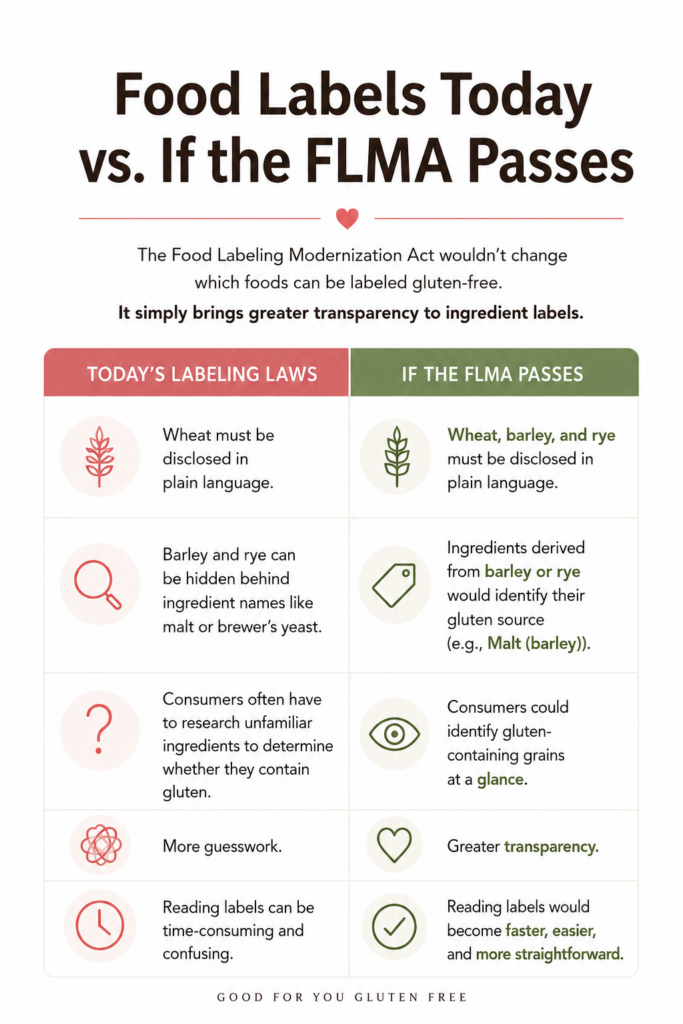
Today, if a packaged food contains wheat, manufacturers must clearly disclose it because wheat is one of the major food allergens covered under the Food Allergen Labeling and Consumer Protection Act (FALCPA).
Unfortunately, the same isn’t true for barley and rye.
Instead, manufacturers can list ingredients such as malt, brewer’s yeast, yeast extract, or barley extract without clearly indicating that they come from gluten-containing grains. That means people with celiac disease often have to play detective while reading ingredient labels.
If the Food Labeling Modernization Act becomes law, manufacturers would be required to identify the source of those ingredients in plain language. For example, ingredient lists could look something like this:
- Malt (barley)
- Brewer’s yeast (barley)
- Natural flavor (rye)
- Barley extract (barley)
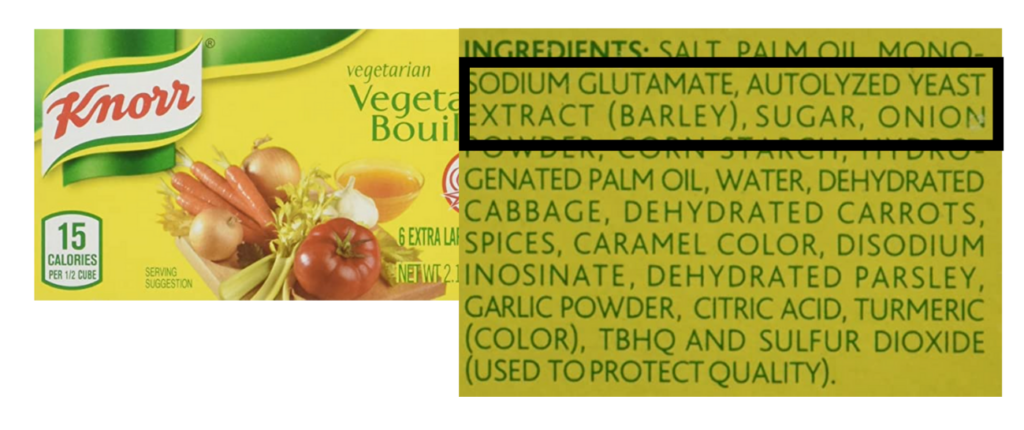
Instead of wondering whether an ingredient contains gluten, consumers would immediately know whether it comes from wheat, barley, or rye. Please note that many manufacturers already voluntarily provide this information; however, it isn’t currently required under federal law.
What the Food Labeling Modernization Act Doesn’t Change
While the bill would improve ingredient transparency by requiring manufacturers to disclose sources of gluten-containing grains, it would not:
- Change the FDA’s definition of “gluten-free.”
- Address cross-contact during manufacturing.
- Require disclosure of whether oats are gluten-free
In other words, people with celiac disease would still need to evaluate products the same way they do today by looking for a gluten-free claim, reviewing the ingredient list, and considering the manufacturer’s food safety practices. The proposed law simply gives consumers better information to make those decisions.
My Take
I’ve been living with celiac disease for more than 14 years, and one of the most frustrating parts of grocery shopping is trying to determine whether an ingredient list contains hidden gluten.
While I always recommend choosing products labeled gluten-free whenever possible, clearer ingredient labels would make shopping easier for everyone because it’s unfair for someone with serious food allergies or celiac disease to know if abstract ingredients, like “natural flavors,” contain barley (gluten).
Whether you’re newly diagnosed or have been gluten-free for years, you shouldn’t have to research every unfamiliar ingredient to determine whether it contains gluten via barley or rye, and I hope lawmakers continue working toward food labeling reforms that give consumers the transparency they deserve.
Until then, I’ll continue encouraging you to read labels carefully, choose products labeled gluten-free or have clean ingredient lists, whenever possible, and stay informed about changes to food labeling laws.
Will this law have any effect on medication labels? When my antihistamine suddenly removed its GF label, it took days to find another manufacturer. It shouldn’t be this hard.
Any updates on this legislation?
Thank you for making this so easy to do Jenny! I just contacted my state representative and senators.
Let’s hope this passes!
Thank you. Nice to see our US Senator, Markey is one of the sponsors. I sent my US rep. Keating the email.