
People tell me time and time again that they don’t trust Trader Joe’s gluten-free labels.
Maybe it’s because the products aren’t certified gluten-free by a third party, or perhaps they were exposed to misinformation or hypervigilant “experts” telling them to avoid Trader Joe’s somewhere along their gluten-free journey.
Or maybe it’s because of the embattled Moms Across America (MAA) report from mid-2024, which claimed to find high levels of gluten in many beloved gluten-free products — including Trader Joe’s Gluten-Free Almost Everything Bagels.¹
Let’s break down the facts, look at the testing data, and discuss whether you can truly trust the gluten-free label at Trader Joe’s.
Trader Joe’s Private Labels From Trusted Brands
Most products at Trader Joe’s are private-label versions of certified gluten-free products you know and love. While Trader Joe’s has never said this publicly, I suspect the following “gluten-free” labeled products are actually produced by trusted gluten-free brands. I also have sources that say the following assumptions are true, but I have not independently verified this information with Trader Joe’s.
Gluten-free donut holes – likely produced by Katz (which is a certified gluten-free brand)

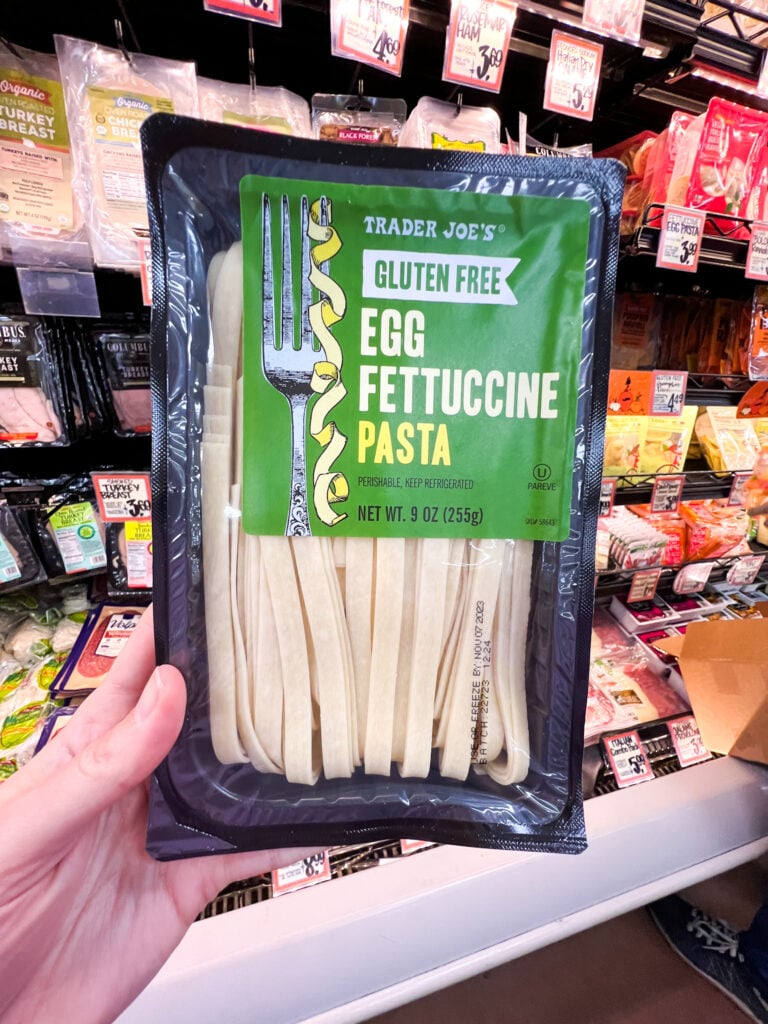
Gluten-free fresh pasta fettuccine – likely produced by Taste Republic (which is a certified gluten-free brand)
Gluten-free cookie dough – likely produced by Immaculate Gluten-Free, which made certified gluten-free cookie dough for a long time but no longer produces it under its brand.

Trader Joe’s Follows FDA Guidelines for GF Labeling
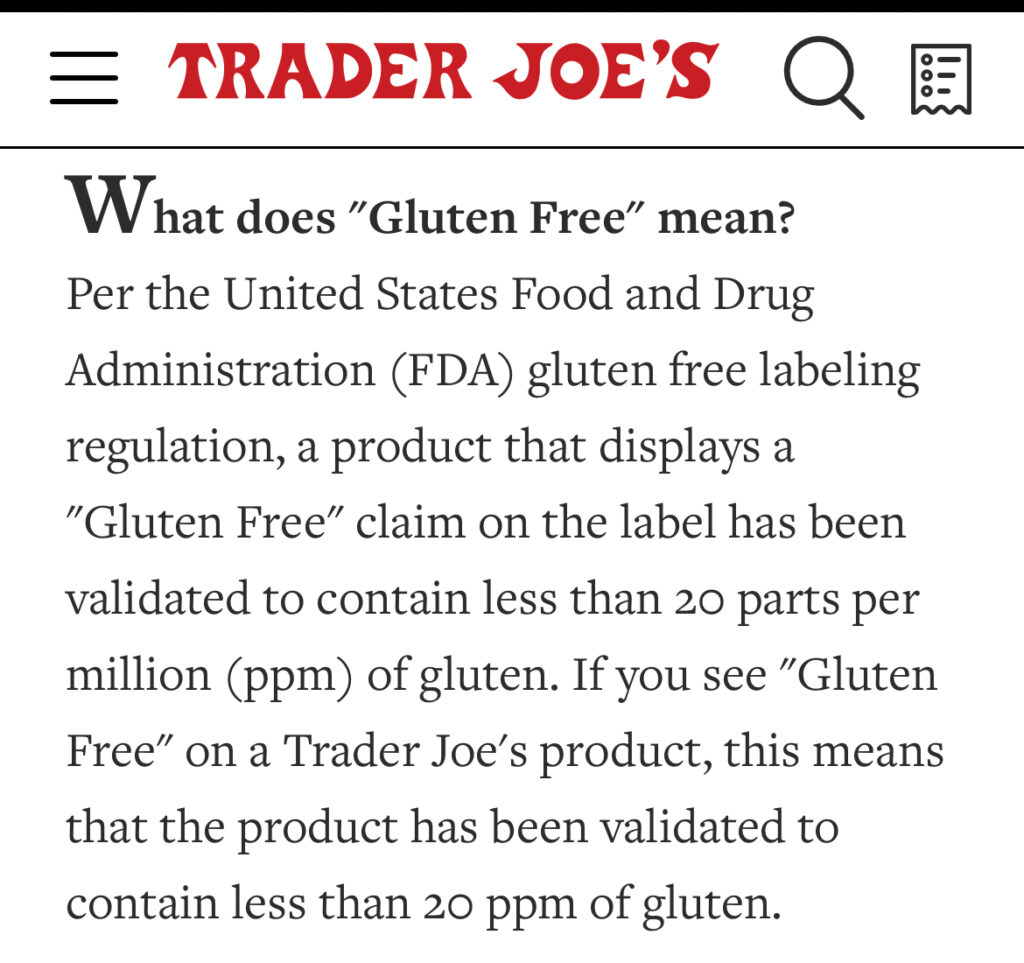
According to Trader Joe’s official policy, when you see “Gluten Free” on a product, it means the product has been validated to contain less than 20 ppm of gluten, in strict accordance with FDA regulations.⁶ In fact, Trader Joe’s has confirmed that their internal standard is even stricter — they hold their gluten-free products to the GFCO standard of less than 10 ppm.³
Imagine if Trader Joe’s decided to label something “gluten-free” without testing or knowing for sure. They would surely be sued or shut down, and that just isn’t the case.
I’ve Tested Dozens of Trader Joe’s Products
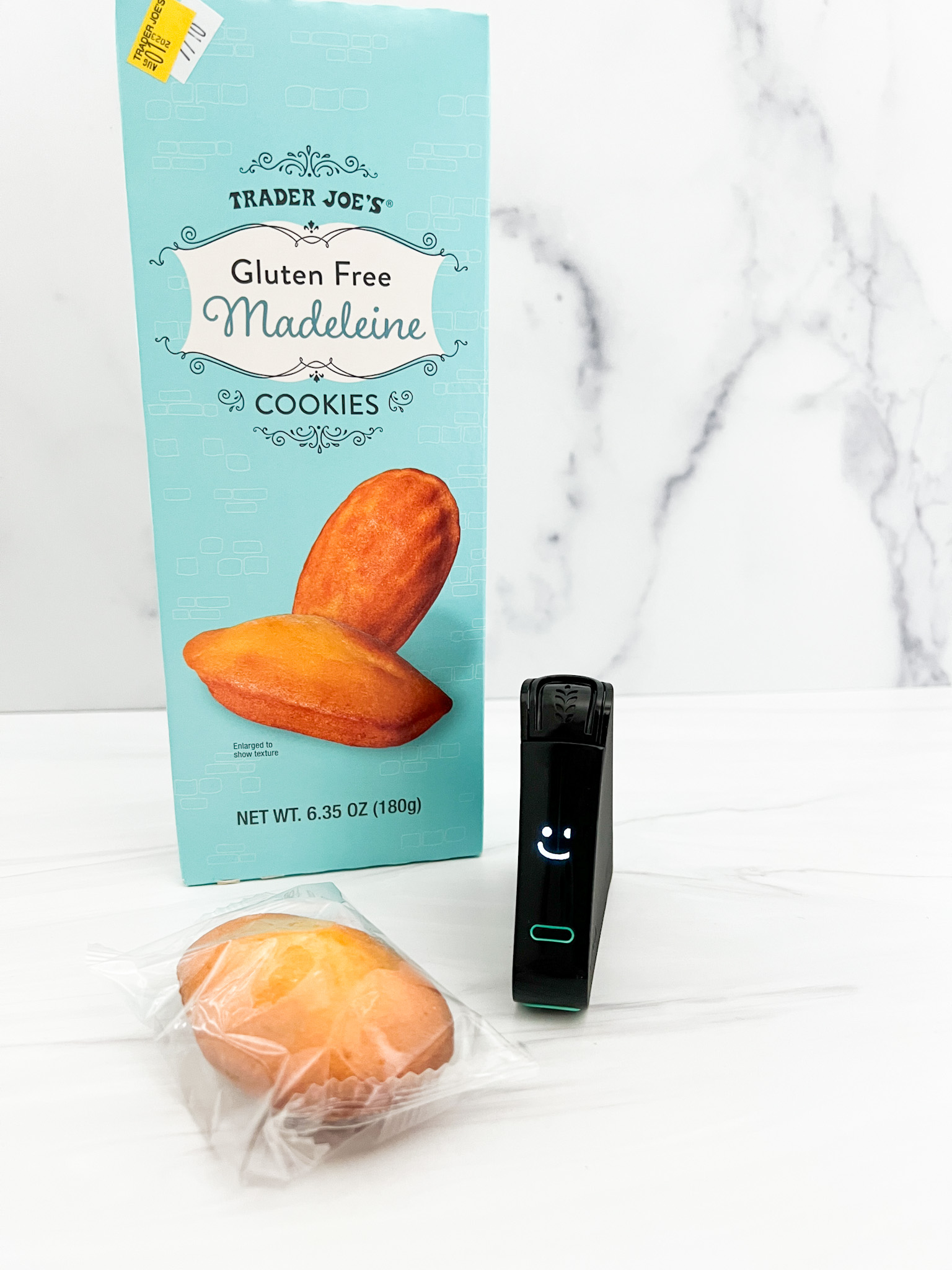
I’ve never found gluten in a Trader Joe’s product labeled “gluten-free.”
I’ve been using my Nima Sensor for years. While I have my fair share of gripes with the company, and many dispute the device’s accuracy, my Nima has never found gluten in a “gluten-free” Trader Joe’s product (for what it’s worth). And I’ve tested dozens of products – see some of them here.
The Moms Across America Gluten-Free Report
So you might be wondering, why in the world are so many people afraid to eat Trader Joe’s products?
I can’t help but wonder if it’s due to the libelous report from Mom’s Across America.
I don’t want to give too much time and credence to the MAA report because it unnecessarily scared the gluten-free community, and its most alarming gluten-free findings have been thoroughly debunked.
In summary, MAA claimed that several gluten-free products — including five that were certified by the Gluten-Free Certification Organization (GFCO) — contained gluten above the FDA’s legal limit of 20 parts per million (ppm), or above the stricter GFCO limit of 10 ppm.¹
Within a few weeks, the GFCO — a highly respected third-party certification agency and non-profit — tested the exact lot numbers of the certified products named in the MAA report. Their accredited labs ran multiple tests on each product and found that none of them contained gluten above safe limits. All tested at less than 5 ppm, well within the GFCO’s own strict standard of 10 ppm.²
Do Trader Joe’s Almost Everything Bagels Contain Gluten?
The GFCO report did not include Trader Joe’s Almost Everything Bagels because they are not GFCO-certified. However, the MAA report claimed these bagels contained a staggering 269.8 ppm of gluten — well above the 20 ppm FDA limit.³
Huh? I eat these all the time. This could not be true. (Again, using a little common sense.)
Following the uproar, an independent testing organization, the Gluten Free Watchdog, stepped in and commissioned testing on the same Trader Joe’s Gluten-Free Almost Everything Bagels named in the report.
The results? The bagels tested at less than 5 ppm of gluten,⁴ well below the FDA’s gluten-free labeling requirement of 20 ppm. The disparaged bagels were, in fact, perfectly safe.
(It’s interesting to note that MMA has not issued a retraction or correction, and the alarming claims continue to circulate online.)

You Can’t Always Blame Gluten
I want the gluten-free community to take away a few important lessons from this situation.
First, you must carefully vet all sources of information. Not everyone is an “expert” or a trusted source, and MMA is certainly not a trusted source for testing gluten-free products. Many organizations and individuals have an agenda and may even use flawed testing methodologies. Always look to reputable organizations like the GFCO for verification.
Second, you can’t blame everything on gluten. We now know the Trader Joe’s bagels are indeed gluten-free, yet people still leave comments disparaging the bagels and claiming they got sick after eating them.
Not everything can or should be blamed on gluten. I had a tummy ache the other day. Why? I ate too much watermelon in one sitting. Did the watermelon have gluten in it? No!
The gluten-free community should use caution before accusing a gluten-free labeled brand of containing gluten. Remember, you could have another food intolerance — like a fructan or FODMAP intolerance — indigestion, or a reaction to a specific ingredient like a gum or preservative. There are too many outside factors that can make us feel sick, and I promise you, it’s not ALWAYS due to gluten.
The Oat Exception: A Word of Caution
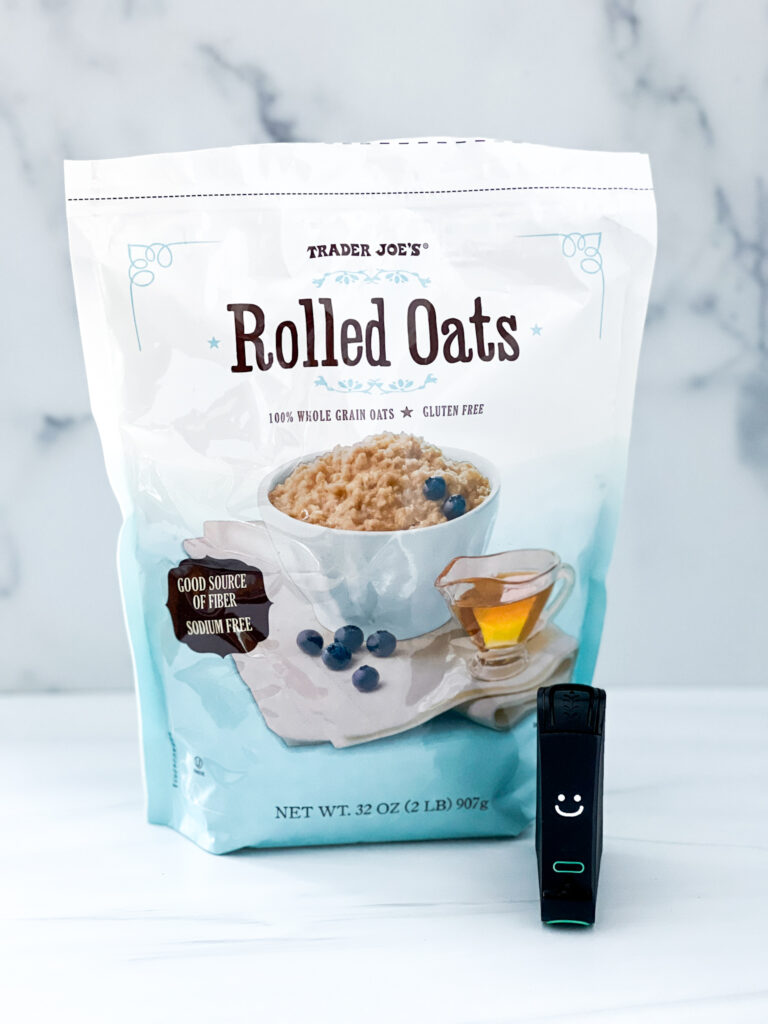
While I trust Trader Joe’s gluten-free labeling for most products, there is one possible exception you need to know about: oats.
In late 2024, Gluten Free Watchdog commissioned testing on several bags of Trader Joe’s Gluten-Free Rolled Oats. Shockingly, multiple bags tested above the 20 ppm FDA limit, with some results as high as 120 ppm.⁷ Because oats are notoriously difficult to keep free from wheat cross-contact during farming and processing, Gluten Free Watchdog issued an urgent recommendation advising people with celiac disease to avoid Trader Joe’s gluten-free oats until further notice.⁷
This is a great reminder that while a store’s overall gluten-free labeling can generally be trusted, oats remain a highly complicated and risky ingredient across the entire food industry — not just at Trader Joe’s.
The Bottom Line
I understand that some people still choose not to eat gluten-free-labeled foods at Trader Joe’s. Maybe they get sick from them. It’s possible, but the truth is that many foods can make you sick, especially if you have a compromised digestive system or other intolerances.
Aside from their oat products, Trader Joe’s gluten-free items are validated to meet FDA standards and have been independently verified by organizations like the GFCO. Unfortunately, navigating gluten-free labeling can feel like the Wild West these days. I hope this information helps you vet your sources carefully, so you can eat with less stress and more freedom.
References
- Moms Across America. (2024). Gluten-Free Food Test Results. https://www.momsacrossamerica.com/gluten_free_food_test_results
- Gluten Intolerance Group / GFCO. (2024). Consumer Notice: Gluten-Free Product Testing Results. https://gluten.org/consumer-notice-gluten-free-product-testing-results/
- Celiac.com. (2024). Trader Joe’s Faces Class Action Lawsuit Over Misleading Gluten-Free Bagel Labels. https://www.celiac.com/celiac-disease/trader-joes-faces-class-action-lawsuit-over-misleading-gluten-free-bagel-labels-r6598/
- Gluten Free Watchdog. (2024). Test Result from Moms Across America on Trader Joe’s Gluten-Free Almost Everything Bagels: Possibly False Positive. https://www.glutenfreewatchdog.org/news/test-result-from-moms-across-america-on-trader-joes-gluten-free-almost-everything-bagels-possibly-false-positive/
- Top Class Actions. (2024). Trader Joe’s Class Action Claims Grocer Falsely Advertises Bagels as Gluten-Free. https://topclassactions.com/trader-joes-class-action-lawsuit-and-settlement-news/trader-joes-class-action-claims-grocer-falsely-advertises-bagels-as-gluten-free/
- Trader Joe’s. Product Information FAQs — What does “Gluten Free” mean? https://www.traderjoes.com/home/FAQ/product-faqs.html
- Gluten Free Watchdog. (2025). Summary of 2024 Oat Testing Data from Gluten Free Watchdog. https://www.glutenfreewatchdog.org/news/summary-of-2024-oat-testing-data-from-gluten-free-watchdog/
Additional Reading
You might enjoy these articles, too:
They’re totally safe.
Thank you for this! Thoughts on their GF blueberry muffins that contain oats?
Thank you so much for helping me understand and deal with my diagnosis of celiac disease. When I was diagnosed via endoscopy in 2016, I was having upper GI problems, but no obvious abdominal symptoms after eating wheat/rye/barley. I immediately changed to a gluten-free diet with no “cheating,” but regularly ate oats that were certified gluten-free. To my dismay, when I had another endoscopy last year, my small intestines still showed the tell-tale flattening of the villi specific to celiac. The only help my gastroenterologist could offer was to tell me I must still be consuming gluten. At that point, after reading that some celiacs also react to oats, I eliminated oats and got more strict about buying certified GF products. What more can I do? Is there anything else that can cause the same type of damage in the small intestine?
Good morning!
You raise a very good point that it is not always gluten. I discovered, since my diagnosis, I have a decreasing tolerance for onion, garlic, and spicy food. I also now produce no lactase at all, according to my celiac specialist G.I. physician. She said that’s a very common reaction, so if I eat something that has the smallest amount of lactose in it, I will have a lactose intolerant reaction. I often have reactions that feel like gluten exposure, but they are not.
Thank you so much for all the work you do for our community!
Warmly,
Alisa Cohen Stein
I am celiac and eat Trader Joe’s sandwich bread and cinnamon bread with no issues. In fact, I prefer their bread over all others I’ve tried. Thank you for defending them!
Thank you as always for your levelheaded approach to dealing with these difficult disease! I really appreciate it amongst all the unfortunate fear mongering that happens in our community.