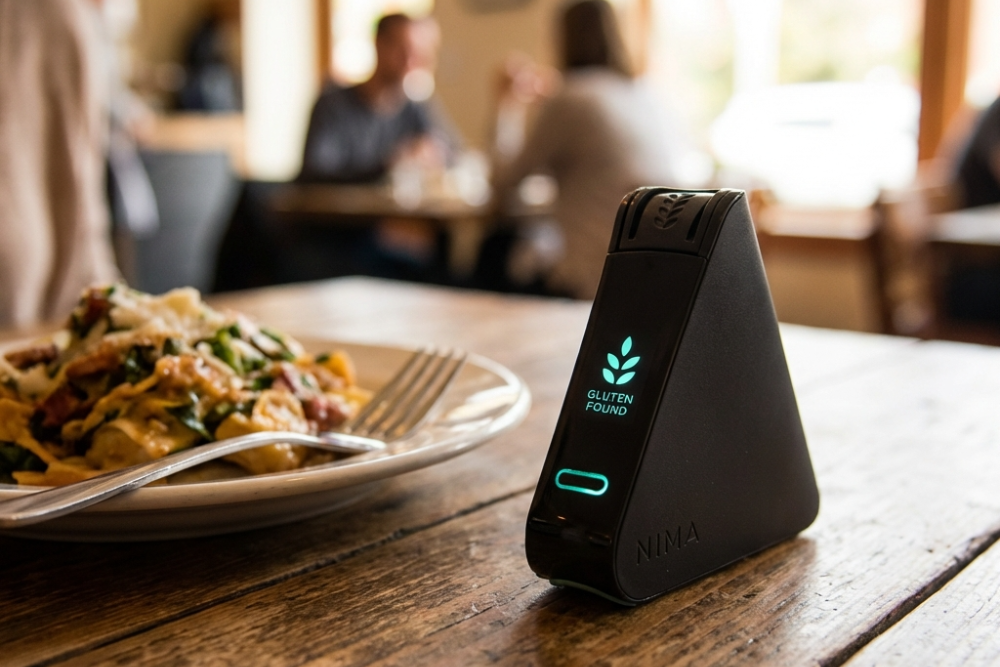
I’m thrilled to write this article about the return of Nima in 2026. After years of ups and downs, the gluten-free community is cautiously hopeful that Nima is back — and better than ever. As an update to my previous article about Nima, I want to be transparent that I am now a Nima affiliate and that this post contains affiliate links. Please see my disclosures. As always, I will share both the pros and the cons so you can make a fully informed decision.
It’s been a few years since I last talked about Nima, and there have been several important developments worth addressing.
As of January 2026, Nima has officially relaunched under a new company called Nima Now. Over the years, the brand has gone through multiple identities: it began as Nima Sensor, became Nima Partners after its acquisition in 2020, and is now owned and operated by Nima Now.
That kind of ownership whiplash understandably left many people — myself included — skeptical.
As I shared in my April 2024 update, I had stopped recommending Nima entirely. At the time, test capsules were extremely difficult (if not impossible) to obtain, and without capsules, the device is essentially useless.

There was also a leadership issue. The CEO at the time was not someone I respected. I had publicly and consistently championed the brand over the years, and I expected to be treated like a collaborator — or at the very least, with basic professional respect. That did not happen.
The experience was disappointing enough that I walked away. I could not put my good name behind a company I didn’t believe would be around much longer.
That said — things appear to be changing for the better.
As Nima Now prepared for its relaunch in 2026, the team reached out to me directly. They offered to send me their next-generation Nima and asked if I would consider revisiting my stance on the brand.
Frankly, I was surprised — and genuinely pleased — that they cared what I thought after everything that had happened since the former CEO took over in 2000.
I tested the new device, and it works just as I remembered. From a consumer standpoint, the changes may feel subtle — a few new bells and whistles, but nothing dramatic to the naked eye. Behind the scenes, however, Nima has clearly invested in strengthening its testing protocols and manufacturing systems, with the goal of creating a more reliable product.
Before I get into what’s new, I want to reiterate one unresolved criticism: Nima still detects gluten at a threshold of 10 ppm. This means a food that legally meets FDA gluten-free labeling standards (20 ppm or less) could still trigger a “gluten detected” result.
In my opinion, any consumer testing device should disclose the amount of gluten present. A product with 11 ppm of gluten is still legally gluten-free — yet Nima would flag it as unsafe. That nuance matters, especially for consumers making real-world decisions. My hope is that one day this technology will be available, and I predict Nima will be the one to bring it to market.
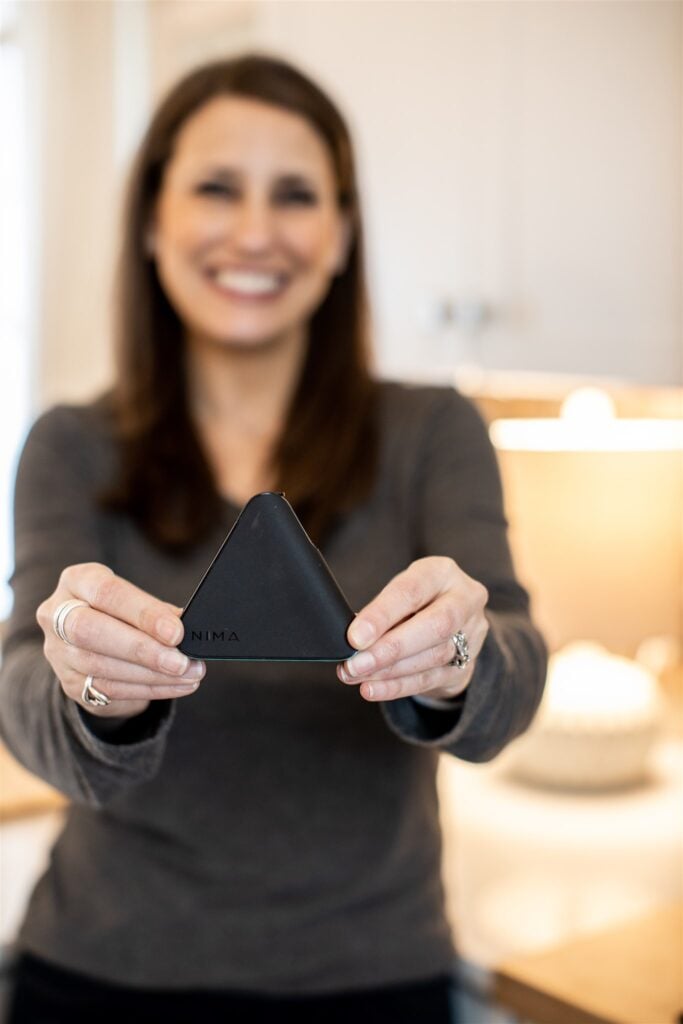
Here’s What Has Changed With Nima in 2026
(1) Reengineered Device and Test Capsules
The next-generation Nima device has undergone multiple hardware upgrades and improvements to its manufacturing systems.
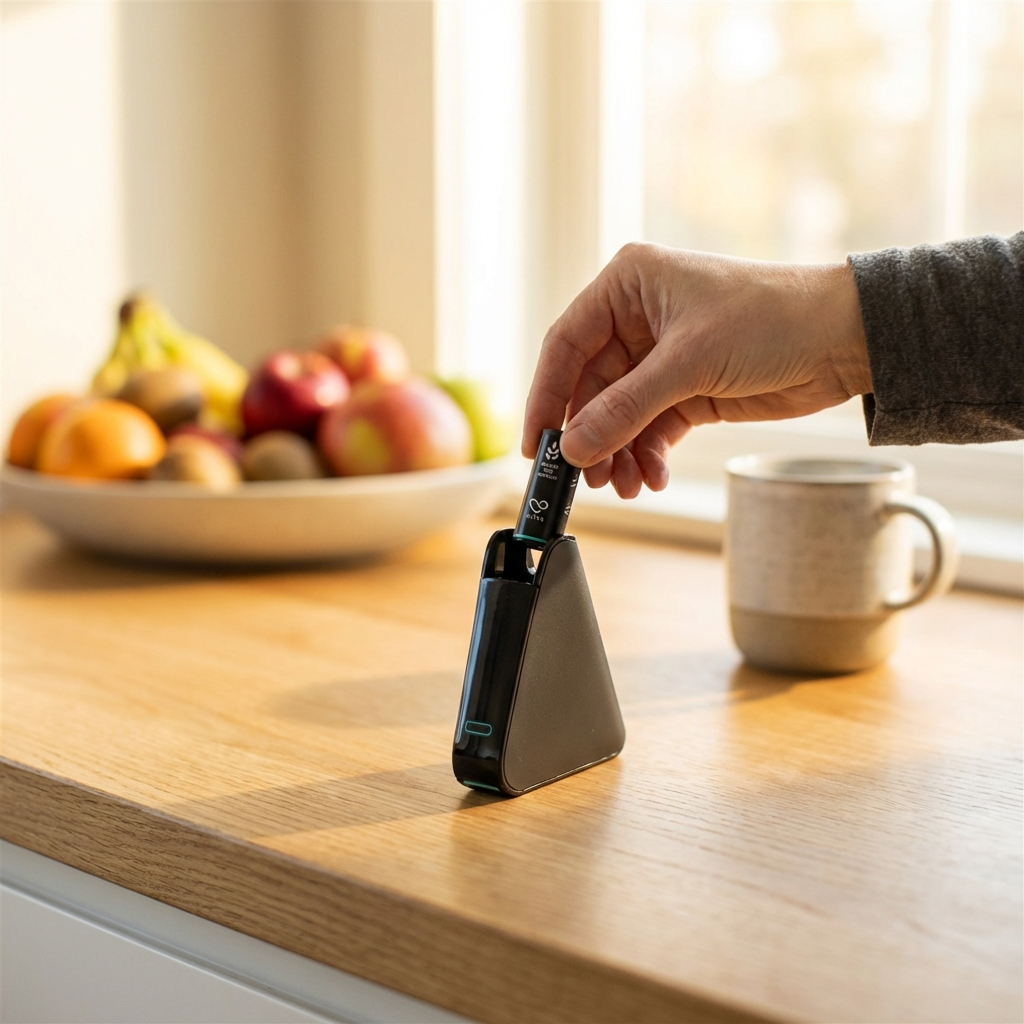
To use it, you simply add a small sample of food to a single-use test capsule and insert the capsule into the device. The device then grinds and mixes the sample with a liquid (Nima’s proprietary antibodies) and, after about two minutes, reveals whether the food contains gluten.
According to Nima, the new sensor features enhanced camera and illumination technology, allowing it to detect even the faintest pink lines on the internal test strip and translate them into a clear result on the digital display — a smiley face when no gluten is detected, or a wheat symbol when gluten is found.
(2) Accuracy Remains – and is Now Validated by BIA Diagnostics
Nima says its device continues to detect gluten from wheat, barley, and rye at levels as low as 10 ppm, with 99% accuracy. That performance has now been independently validated by BIA Diagnostics, a leading allergen-testing laboratory that verifies gluten-free foods.
According to Nima, this validation confirms that the device meets rigorous food-testing standards across multiple real-world food types. And every sensor and test capsule is manufactured in ISO 13485–certified facilities, ensuring the same medical-grade quality standards used for diagnostic-level devices.
Notably, BIA Diagnostics is the same laboratory used by Gluten Free Watchdog, a well-known influencer who sends approximately five products each month to BIA Diagnostics for testing and shares the results with paid subscribers.
Gluten Free Watchdog has been highly critical of Nima since the beginning, and it has honestly pained me to watch influential voices tear down innovative products in our industry. That’s one of the reasons I’ve continued to stand up for Nima time and time again. Is Nima perfect? Absolutely not. But it is pretty darn cool — and it’s a genuinely useful tool in our celiac toolkits when used correctly.
It’s also important to remember this distinction: testing five products in a lab says nothing about the gluten-free status of the actual food on my plate. Nima, on the other hand, tests the exact food I’m about to eat. That’s the real genius of Nima.
(3) The Mobile App Actually Works!
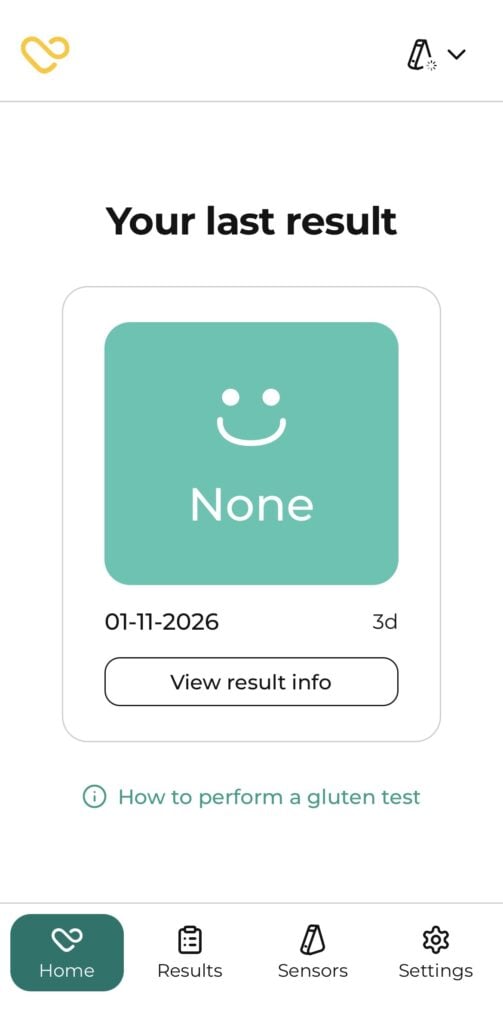
The Nima Now mobile app is live and functional, allowing users to automatically log test results and contribute to a growing, community-powered database. I genuinely love this feature — sharing results is a form of care.
I downloaded the app, and after my first test, I received a pop-up notification on my phone with the results, ready to be logged into the system.
(4) New Leadership is Here!
And music to my ears: Nima Now has a new CEO, Michael Glick. While I don’t know whether the former CEO is involved with Nima Now, it’s a relief to see new leadership in place — and to see Glick accurately identify himself as the company’s CEO.
In the past, David Dellafave referred to himself as the “founder” of Nima Partners. While he may have founded the company that acquired Nima at the time, that framing was misleading and could easily have implied he was the founder of the device itself. Nima was founded by Shireen Yates and Scott Sundvor, two MIT students, not Dellafave.
I’ll leave it at this: leadership matters, and this change is significant. I’ll refrain from saying more so I don’t get myself into trouble.
Want the New Next-Generation Nima?
If you’re interested in trying the newly relaunched Nima Now device, you can order one directly at NimaNow.com. Use the code GOODFORYOUGLUTENFREE for 15% off the following products: NIMA™ Gluten Sensor, NIMA™ Gluten Capsules (6-pack), NIMA™ Starter Pack.
Have an Old Nima Device?
If you already own an older Nima device, it can still work with the updated system. However, you’ll need to re-qualify it before using the new capsules to ensure your device’s firmware and calibration are compatible.
This process requires three test capsules and is a bit involved, so I recommend reaching out to Nima support directly for step-by-step guidance.
Should You Buy a Nima?
I’ve always felt that owning a Nima is a wise investment for anyone who is serious about being gluten-free. That said, there are important limitations and nuances to using the device that you must understand. If you take the time to become an educated user, I would 100% recommend getting one.
Before investing in a Nima, you must read my article, What You Need to Know About the Nima Sensor Before You Buy.
Nima is perfect for those moments when you just don’t know — when a little more information about the food placed in front of you would be genuinely helpful.
Do I use my Nima all the time? No. In fact, using it while eating out can give me a bit of anxiety, so I no longer use it in restaurants.
But just the other day, I purchased a product that wasn’t labeled gluten-free. I wanted to test it — just to be sure. Nima was all smiles, giving me the confidence I needed to freely enjoy a food I’d been craving.
As always, my goal is to give you the full picture — the good, the bad, and the unresolved — so you can decide what’s right for you.
Is Nima for everyone? Absolutely not. But it is for a lot of us.
Leave a Comment