If you’ve spent any time in the gluten-free community, you’ve probably seen someone ask: “Is this celiac-safe?” Maybe they’re asking about oats, a restaurant, or a gluten-free product made on shared equipment.
While “celiac safe” doesn’t have an official definition, there are some evidence-based guidelines we can use to assess whether a food or product is truly safe for someone with celiac disease.
In general, a product is considered celiac safe when it meets the FDA’s gluten-free labeling standards. A product may offer an additional layer of confidence when it is certified gluten-free by a reputable third-party organization, although certification is not required for a product to be safe.
In this article, we’ll take a closer look at what “celiac safe” really means, where confusion often comes from, and how to evaluate gluten-free foods using science rather than fear while understanding the nuances behind labeling, certification, oats, shared facilities, and more.
The Short Answer
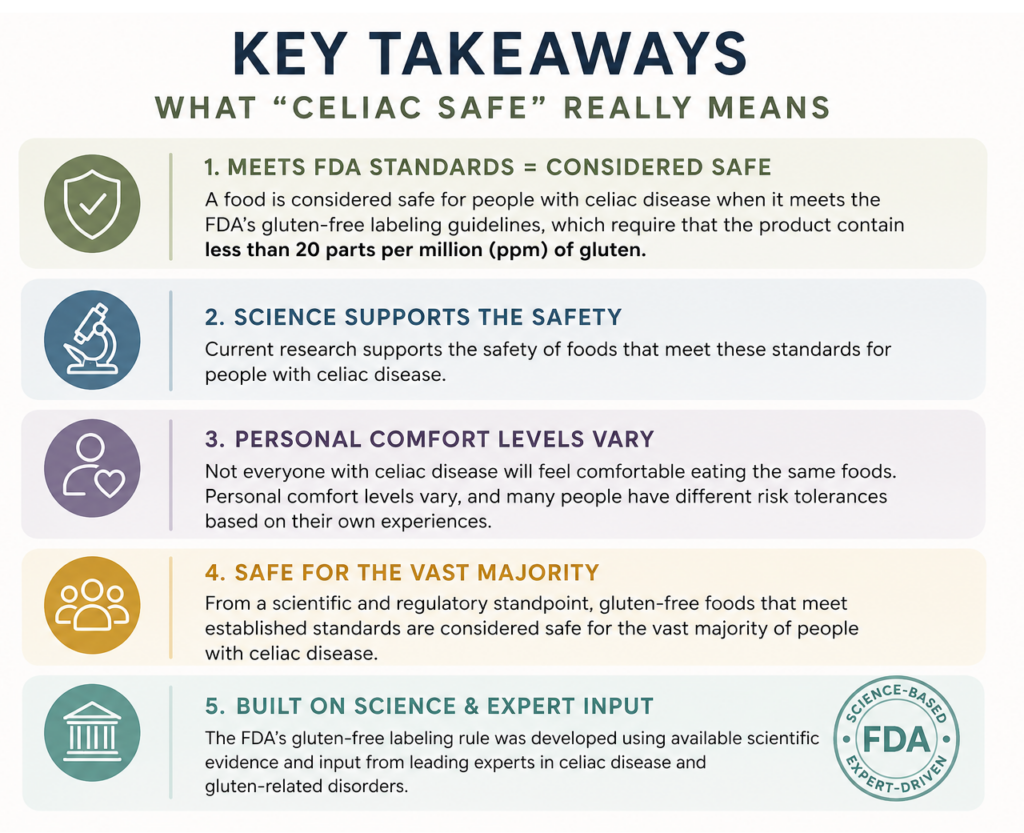
A food is considered safe for people with celiac disease when it meets the FDA’s gluten-free labeling guidelines, which require that the product contain less than 20 parts per million (ppm) of gluten.
While current research supports the safety of foods that meet these standards for people with celiac disease, that doesn’t mean every person with celiac disease will feel comfortable eating the same foods. Personal comfort levels vary, and many people have different risk tolerances based on their own experiences.
That said, from a strong scientific and regulatory standpoint, gluten-free foods that meet established standards are considered safe for people with celiac disease. The FDA’s gluten-free labeling rule was developed using available scientific evidence and input from leading experts in celiac disease and gluten-related disorders, including Dr. Alessio Fasano.
Why Does “Celiac Safe” Cause So Much Confusion?
The gluten-free community is full of strong opinions, and it can sometimes be difficult to separate personal preferences from evidence-based recommendations. I used to unnecessarily avoid products that were perfectly safe for me to eat, mostly out of fear or because I didn’t realize they were, in fact, safe for me.
Some people won’t eat gluten-free products made in shared facilities or oats that aren’t certified gluten-free. In fact, some people refuse to eat anything that isn’t certified gluten-free, even though, ironically, many certified gluten-free products are made on shared production lines and in shared facilities.
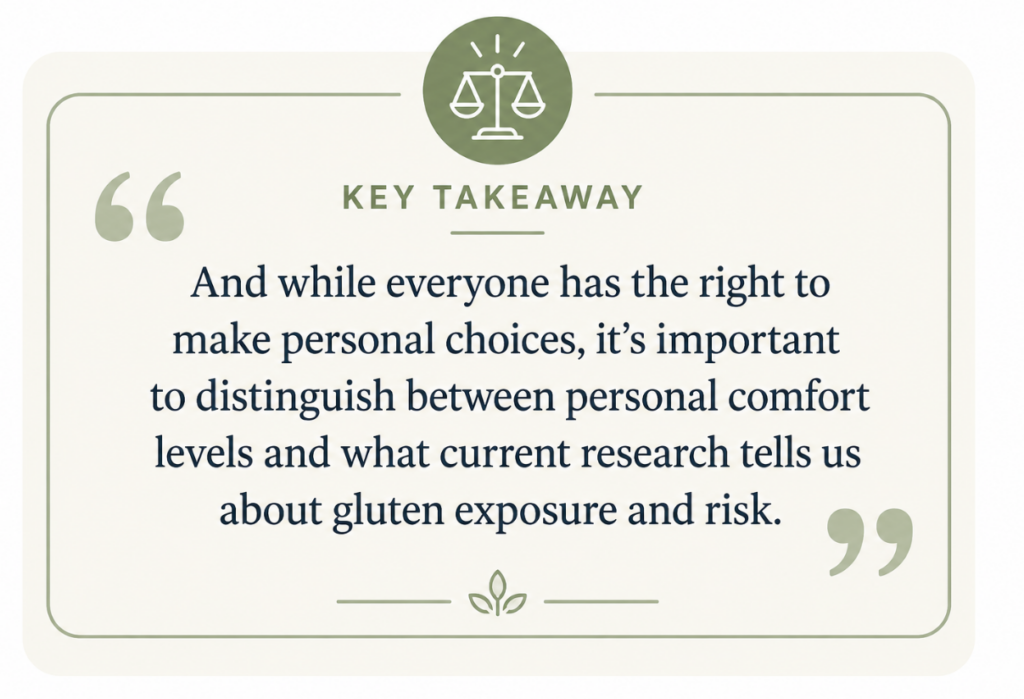
And while everyone has the right to make personal choices, it’s important to distinguish between personal comfort levels and what current research tells us about gluten exposure and risk.
Gluten-Free Labeling and Celiac Safety: The Research
In the United States, the FDA requires foods labeled “gluten-free” to contain fewer than 20 ppm of gluten. If a product is labeled gluten-free, the manufacturer is legally responsible for ensuring it meets the FDA’s requirements.
Importantly, this standard wasn’t chosen randomly or arbitrarily.
Before establishing the gluten-free labeling rule, the FDA reviewed extensive scientific research on celiac disease, gluten exposure, and intestinal damage. The agency also consulted leading researchers, physicians, and celiac disease experts to determine a threshold that would protect the vast majority of people with celiac disease while remaining practical for food manufacturers to achieve.
The result was the 20 ppm standard, supported by research indicating that trace amounts of gluten below this threshold don’t cause intestinal damage in the vast majority of people with celiac disease.
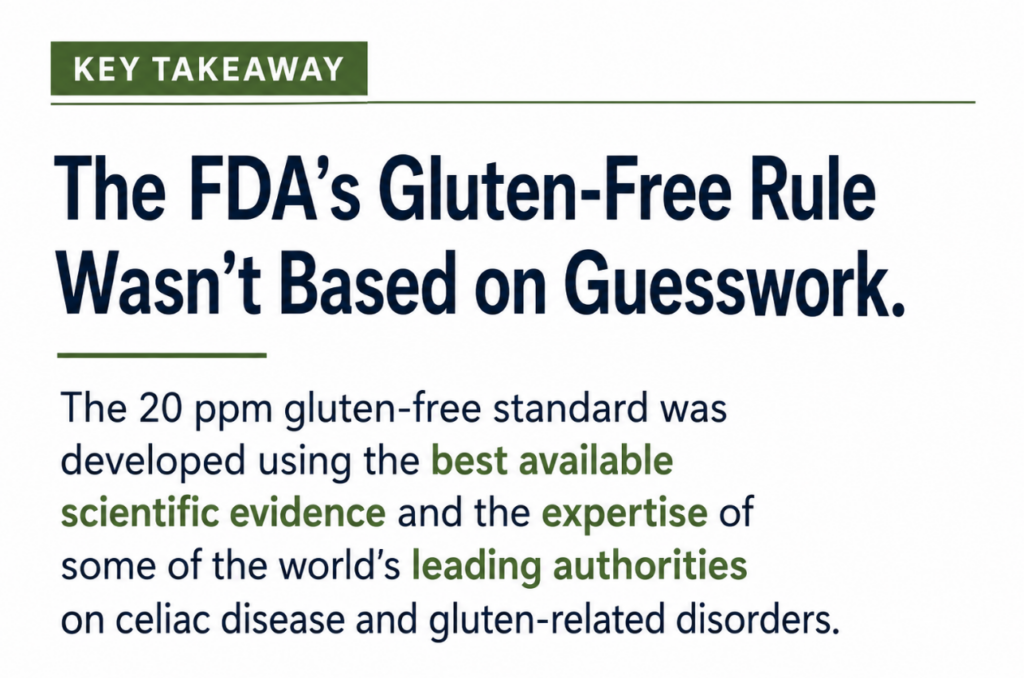
In other words, the FDA’s gluten-free rule wasn’t based on guesswork. It was developed using the best available scientific evidence and the expertise of some of the world’s leading authorities on celiac disease and gluten-related disorders.
Is “Certified Gluten-Free” Necessary?
A third-party gluten-free certification can provide an additional layer of confidence for consumers. Organizations such as the Gluten-Free Certification Organization (GFCO) and Beyond Celiac verify that products meet established gluten-free standards and, in some cases, requirements that exceed the FDA’s gluten-free labeling rule.
As someone with celiac disease, I appreciate when brands invest in certification. It sends a strong message to the gluten-free community that the company takes gluten-free safety seriously.
That said, certification is not required for a product to be celiac-safe.
Many reputable brands produce safe gluten-free foods without pursuing certification. Likewise, many naturally gluten-free foods, such as fresh fruits, vegetables, and unseasoned meats, are perfectly safe for people with celiac disease despite lacking a gluten-free certification.
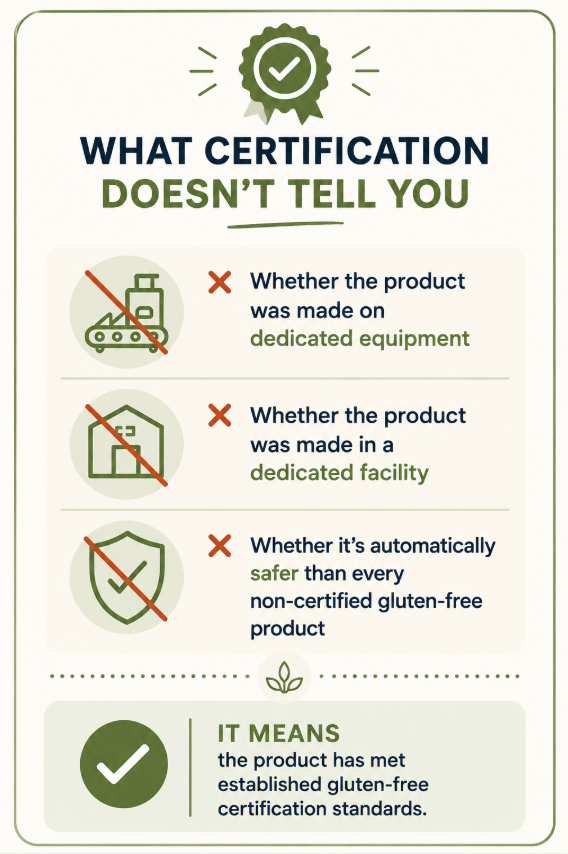
It’s also important to understand what certification does and does not tell you.
For example, a certified gluten-free product is not automatically safer than every non-certified gluten-free product. It also doesn’t mean the product was created in a dedicated facility with dedicated equipment.
That said, if a product is certified gluten-free by a reputable organization such as GFCO, consumers with celiac disease should feel confident eating it. Certification is one of the strongest signals available that a product meets established gluten-free standards and is considered celiac-safe.
Shared Facilities, Shared Equipment, and “May Contain” Statements
One of the biggest misconceptions in the gluten-free community is that a product made in a shared facility or on shared equipment cannot possibly be safe for someone with celiac disease, and this is simply not true.
Precautionary allergen statements such as “processed in a facility that also handles wheat” or “manufactured on shared equipment with wheat” are voluntary disclosures primarily intended for people with wheat allergies, not for people with celiac disease.
Many manufacturers produce both gluten-containing and gluten-free products while maintaining strict cleaning, testing, and quality-control procedures. In fact, some of the most trusted gluten-free brands (hello Ben & Jerry’s!) manufacture products in shared facilities or on shared production lines. You just don’t know it because companies are not required to disclose this information, and only some do.
And here’s something worth considering: Brands that voluntarily disclose shared facilities or shared equipment are often being more transparent than required by law. Rather than penalizing companies for sharing additional information, we should appreciate that transparency and evaluate the product based on the totality of evidence.
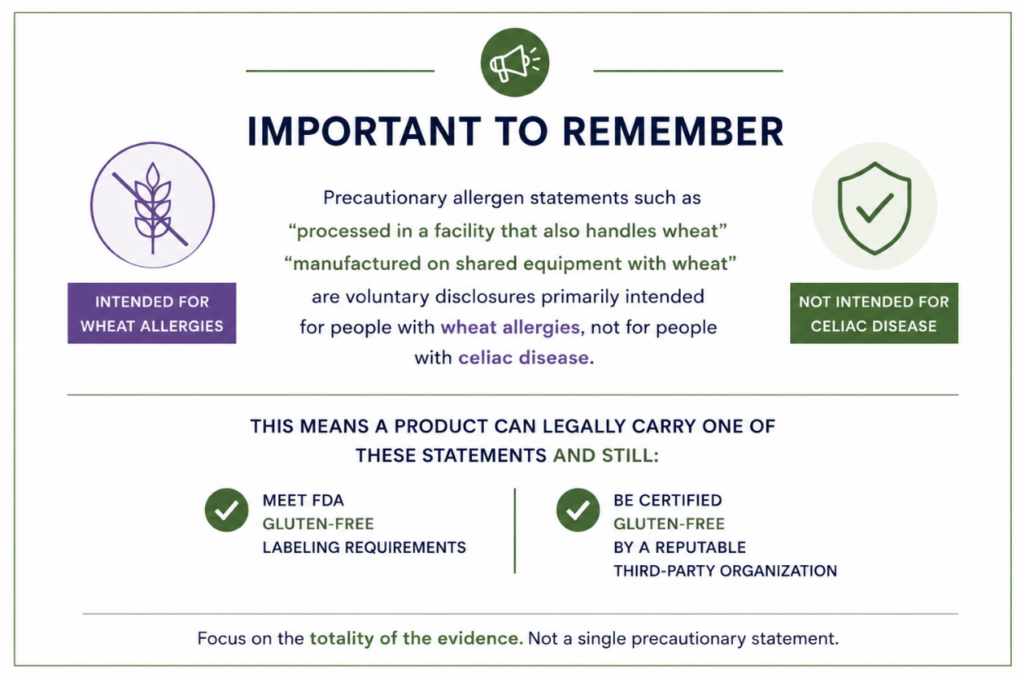
What matters is not whether gluten exists somewhere in the building or whether wheat is processed elsewhere on the production line. What matters is whether the finished product meets gluten-free standards.
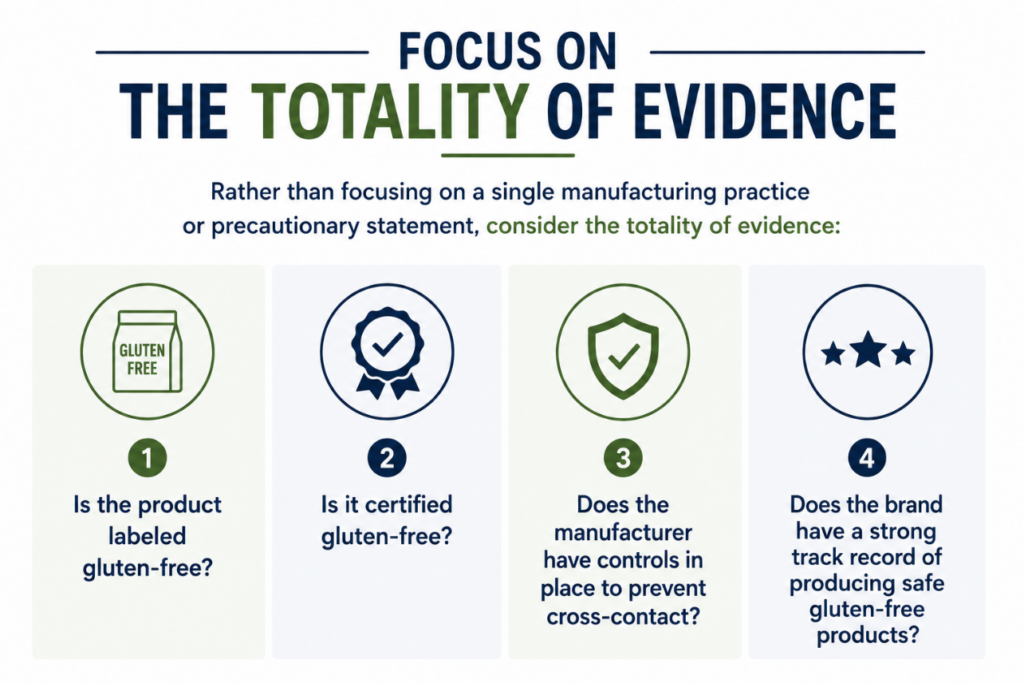
Rather than focusing on a single manufacturing practice or precautionary statement, consider the totality of evidence:
- Is the product labeled gluten-free?
- Is it certified gluten-free?
- Does the manufacturer have controls in place to prevent cross-contact?
- Does the brand have a strong track record of producing safe gluten-free products?
Are Oats Celiac Safe?
Pure, uncontaminated oats do not technically contain gluten. However, the concern with oats is that they come in contact with wheat, barley, or rye during growing, harvesting, transportation, and processing.
That’s why people with celiac disease should choose oats that are labeled gluten-free, and even better, certified gluten-free, especially given the controversies over oats in recent years. For most people with celiac disease, gluten-free oats can be safely included in a healthy gluten-free diet and are “celiac safe.”
Is Gluten-Free Wheat Starch Safe?
While gluten-free wheat starch is made from wheat, it is processed to remove the gluten protein. Multiple studies have shown that gluten-free wheat starch can be safely consumed by people with celiac disease.
In fact, gluten-free wheat starch is widely used in gluten-free products throughout Europe and is increasingly appearing in products sold and restaurants in the United States.
Remember, while gluten-free wheat starch is 100% celiac-safe, it’s not safe for people with wheat allergies.
The Bottom Line: What Does “Celiac Safe” Really Mean?
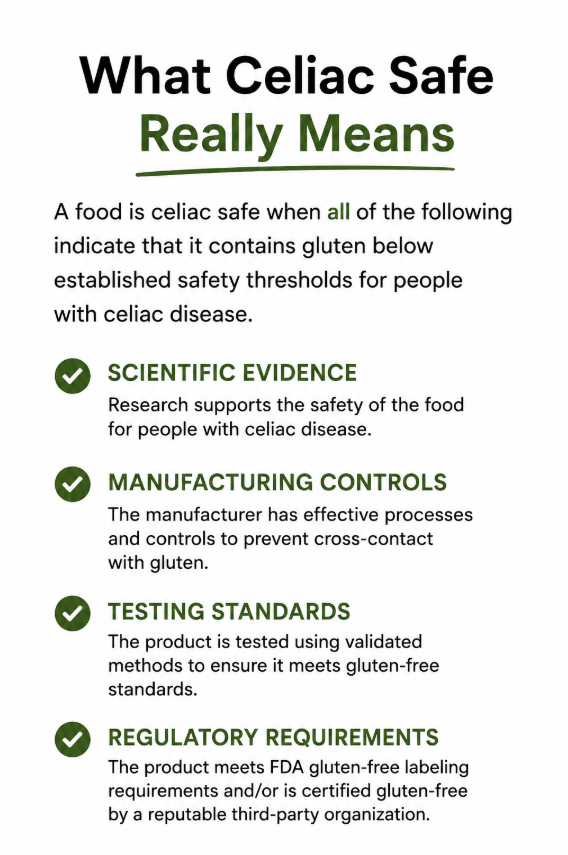
A food is celiac safe when available scientific evidence, manufacturing controls, testing standards, and regulatory requirements indicate that it contains gluten below established safety thresholds for people with celiac disease.
That doesn’t mean everyone with celiac disease will make the same food choices, and that’s okay.
Some people feel most comfortable choosing only certified gluten-free products. Others avoid oats or prefer products made in dedicated facilities. We all have different experiences, comfort levels, and risk tolerances.
What matters is understanding the difference between a personal preference and an evidence-based risk.
I’ll be honest: It took me years to get here.
When I was first diagnosed, I avoided far more foods than I needed to because I was scared of getting sick. Over time, I learned to trust the science, understand labeling laws, and evaluate products based on the totality of the evidence rather than a single statement on a package.
That doesn’t mean you have to change your approach overnight. If you’ve spent years avoiding shared facilities, shared equipment, gluten-free oats, or gluten-free wheat starch, it can take time to feel comfortable looking at those foods differently.
My hope is simply that this article helps you make informed decisions based on facts rather than fear.
Because at the end of the day, living with celiac disease is hard enough. The goal isn’t to make your world smaller than it needs to be. The goal is to follow a strict gluten-free diet while still enjoying as much freedom, flexibility, and peace of mind as possible.
Did this post change your mind? Please sound off in the comments below. 👇
Such a great article. You do such great research. It really clears up a lot of confusion. I don’t eat a lot of packaged foods because I am also grain free. Sometimes I see the made on shared facilities. I now understand what everything means. Thank you