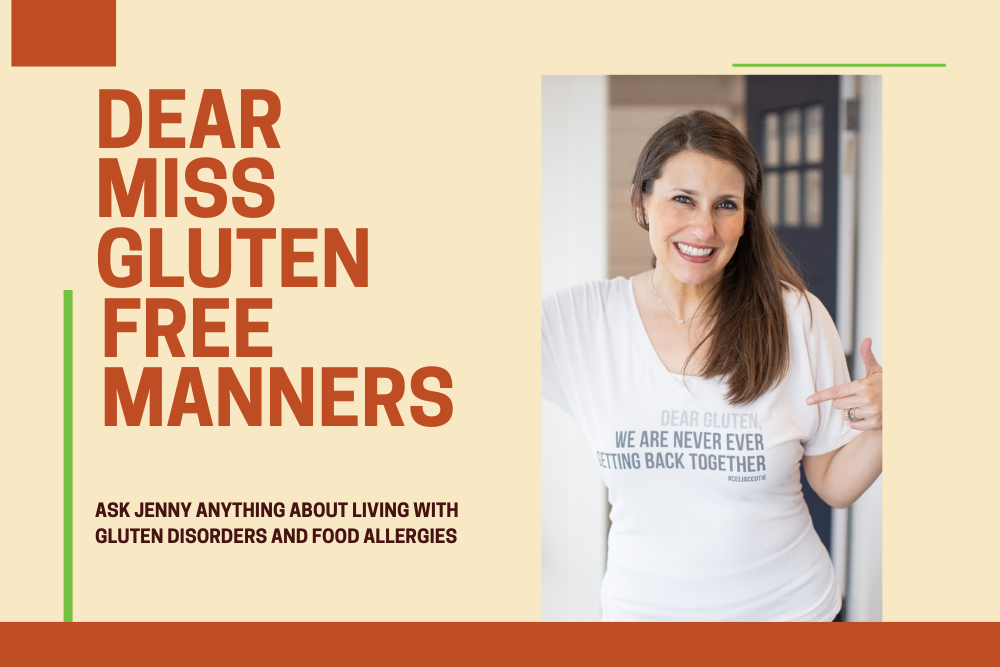
Welcome to Miss GF Manners, where I help you handle awkward gluten-free moments with grace and boundaries.
Send me your etiquette questions. I’ll answer them thoughtfully — and with the nuance and sensitivity our community deserves.
Here’s this week’s question:
Dear Miss. GF Manners,
From the beginning of my diagnosis, I have had family/friends try to make gluten-free items for family gatherings. My concern is that I don’t know how well or how clean their kitchens are concerning gluten contamination. I know they are making items for me, and it is very thoughtful, but I wish they wouldn’t as there is no way I am eating what they prepared. How do you handle this situation?
Sincerely,
Concerned About Cleanliness
Dear Concerned About Cleanliness,
What stands out to me most in your question is this: you are surrounded by people who are trying to include you. That is a gift, even if it feels complicated. I believe that intention is worth protecting alongside your well-being.
Your concerns about cross-contact are completely valid. Shared kitchens can be risky. Most people don’t realize how easily gluten can creep into our food from unclean or scratched pots, toasters, air-fryers, and even cutting boards. What feels obvious to you is often new to them.
I believe that, with a little guidance, your friends and family can learn how to prepare food safely for you. And when they do, it will lift an enormous weight off your shoulders.
Here’s how I would approach this situation:
1. Be gracious.
Tell them that you really appreciate that they want to make food for you.
2. Frame it as a safety concern.
Explain what cross-contamination is and some of the places it’s easy to miss when you’re not used to cooking for someone on a strict gluten-free diet.
3. Offer simple, clear guidelines.
Tell them that if they prepare food for you, would they mind if you shared a few tips to help you stay safe? Kindly ask them to:
- Wash their hands, wipe down counters, and clean all utensils and pans before cooking.
- Check all ingredient labels and only use items labeled “gluten-free.” Warn them that gluten can hide in seemingly “innocent” looking items, like soy sauce and salad dressings.
- Keep gluten-containing ingredients/dishes separate while preparing gluten-free items.
- Call you if they have questions about ingredients or anything.
If you are worried about certain foods, like baked goods, ask that they not prepare those items for you going forward. It’s important to explain that things like a shared electric mixer or a shared cupcake pan with baked-on residue are just too risky, especially since bits of gluten could be stuck in the crevices.
Once someone understands the nuances, they will feel more comfortable cooking for you and will even do it with more care and love than before.
Relieve Your Burden
Overall, it sounds like you have friends and family who truly “get it,” and that, my friend, can relieve so much of the burden you carry.
Helping others help you can mean not always bringing your own food to gatherings. It can mean sharing in family traditions again. It can mean feeling less isolated. And, truthfully, isn’t that a better way to approach life with food allergies?
I truly believe with patience and clear communication, you can have your gluten-free cake and eat it too.
With care,
Miss GF Manners
Leave a Comment