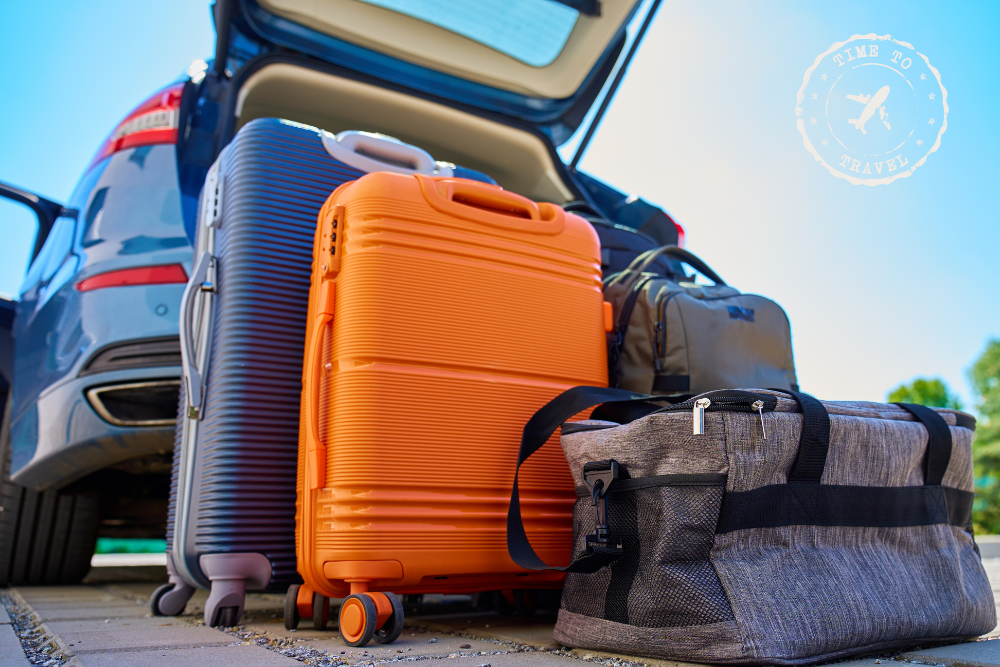
I’ve been seeing something interesting circulating in gluten-free Facebook groups lately. People are saying that because celiac disease is considered a disability, we’re entitled to bring an extra carry-on bag filled with gluten-free food when flying.
I started digging into the rules from the Transportation Security Administration (TSA), the U.S. Department of Transportation (DOT), and individual airlines to figure out what’s actually allowed. And let me tell you, the rules aren’t nearly as straightforward as some people on social media make them sound.
Here’s what I found, what I couldn’t confirm, and how I think we should approach this as a community.
First, Is Celiac Disease Considered a Disability?
Yes, celiac disease is a disability under federal law because it can substantially limit major life activities, including eating and digestive functions.
For airline travel, the relevant federal “disability” law is called the Air Carrier Access Act (ACAA), which prohibits airlines from discriminating against passengers with disabilities. It also requires airlines to provide certain disability-related accommodations, including assistance with mobility, communication, service animals, and assistive devices.
Can You Bring an Extra Bag of Gluten-Free Food on an Airplane?
While passengers with disabilities can bring qualifying assistive devices without those items counting toward their regular baggage allowance, including things like wheelchairs, CPAP machines, and other disability-related medical equipment, the gray area is whether a bag full of gluten-free sandwiches, crackers, protein bars, and other foods you need to safely get through a long flight counts toward your regular baggage allowance.
I couldn’t find a federal regulation explicitly stating that people with celiac disease are entitled to an additional carry-on bag filled with gluten-free food. And I think there’s an important difference between an airline allowing you to bring medically necessary food and allowing you to bring an extra bag to carry it.
I Asked Southwest Airlines Directly
I contacted Southwest through its online customer service assistant and explained that I have celiac disease and wanted to know whether I could bring a separate bag containing only medically necessary gluten-free food.
Here’s part of the response I received: “A separate food bag would count toward that [carry-on] allowance unless it qualifies as a medical/assistive device.”
Southwest also explained that its published guidance doesn’t specifically address whether medically necessary food bags qualify for an exemption.
In other words, Southwest couldn’t confirm that my celiac diagnosis automatically entitled me to an extra bag. That’s not necessarily a definitive no to an individual accommodation request. But it’s certainly not the blanket yes I’ve been seeing shared online.
The online assistant suggested I call Southwest for further clarification, but after waiting on hold for 10 minutes, I gave up. I didn’t personally need an extra bag, and even if someone on the phone approved it, who’s to say a gate agent would honor that conversation? Without a clear written policy, I wasn’t comfortable treating it as a guaranteed accommodation.
My Advice?
I think there’s a difference between requesting an accommodation you genuinely need and assuming your celiac diagnosis automatically gives you an extra carry-on bag. Personally, I’ve always managed to pack enough gluten-free food in my regular carry-on, even for long flights. But I also recognize that everyone’s circumstances are different, and some travelers may genuinely need additional accommodations.
Don’t show up at the airport assuming you can bring three carry-on bags instead of two simply because you have celiac disease. If you genuinely need an additional food-only bag, contact your airline in advance and ask whether they’ll accommodate it. And if they say yes, get it in writing. A gate agent may not be aware of a conversation you had with customer service.
What About International Flights?
The Air Carrier Access Act also applies to flights operated by U.S. airlines, including international flights, and flights to or from the United States operated by foreign airlines. But that doesn’t mean every country or airline has identical baggage and security rules.
If you’re traveling internationally, check the policies of every airline operating your flights, as well as the security rules at airports where you’ll be screened.
And don’t forget about customs! Some countries restrict foods like fresh produce, meat, and dairy products, even if they’re gluten-free.
The Bottom Line
While celiac disease can qualify as a disability under federal law, that doesn’t automatically guarantee an extra carry-on bag filled with gluten-free food. At least, I couldn’t find a federal rule guaranteeing that accommodation, and Southwest couldn’t confirm that its policy provides it.
Here’s What I’d Recommend Before Your Next Flight:
✔️ Keep food in your regular carry-on or personal item. TSA generally allows solid foods through security. Liquids may require additional screening, if allowed at all.
✔️ Bringing perishable food? TSA allows frozen solid ice packs through U.S. security checkpoints, which can be useful if you want to bring a turkey sandwich. Medically necessary cooling supplies may qualify for additional exceptions. Check the rules if you’re traveling internationally. (Just be sure to either freeze your ice pack on a return trip home or pack the liquid ice pack in your luggage.)
✔️ Truly need an additional food-only bag? Contact your airline ahead of time, explain your situation, and ask for written confirmation of any accommodation. If you believe an airline is denying a disability accommodation you’re legally entitled to, you can ask to speak with its Complaints Resolution Official (CRO).
I love finding ways to make gluten-free travel easier, but I also believe in giving you information you can actually rely on. And while I fully support requesting accommodations when they’re genuinely needed, I don’t think we should treat this as a loophole to snag an extra carry-on bag. Disability accommodations are there for people who need them, and we should respect that.
Your Experience?
Have you ever brought an extra bag of gluten-free food on a flight because you have celiac disease? Did the airline allow it? I’d love to hear what happened. Just remember, one person’s experience doesn’t necessarily mean another traveler will have the same outcome.
Note: Airline and TSA policies can change. This article reflects the guidance available as of October 2026 and is not legal advice.
Leave a Comment