
If you have celiac disease, you know you’re supposed to read every food label, every time.
But what if the label itself doesn’t make gluten easy to find?
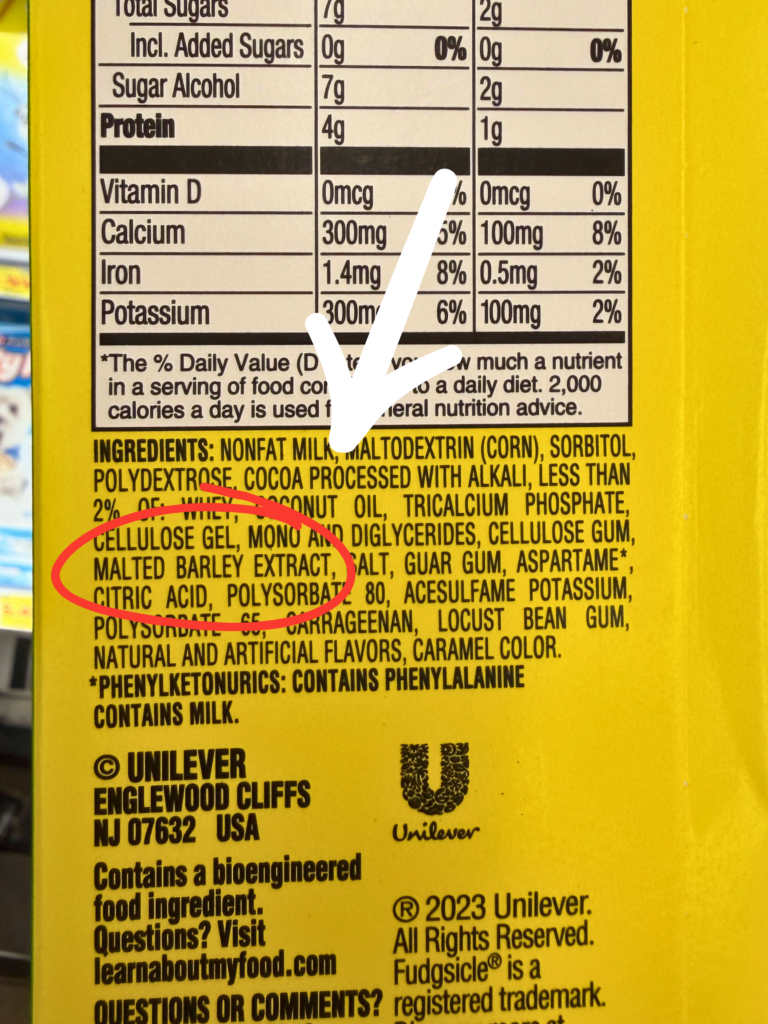
I recently posted a video about Popsicle Fudgsicles, which contain malted barley extract. Yes, barley. Yes, gluten.
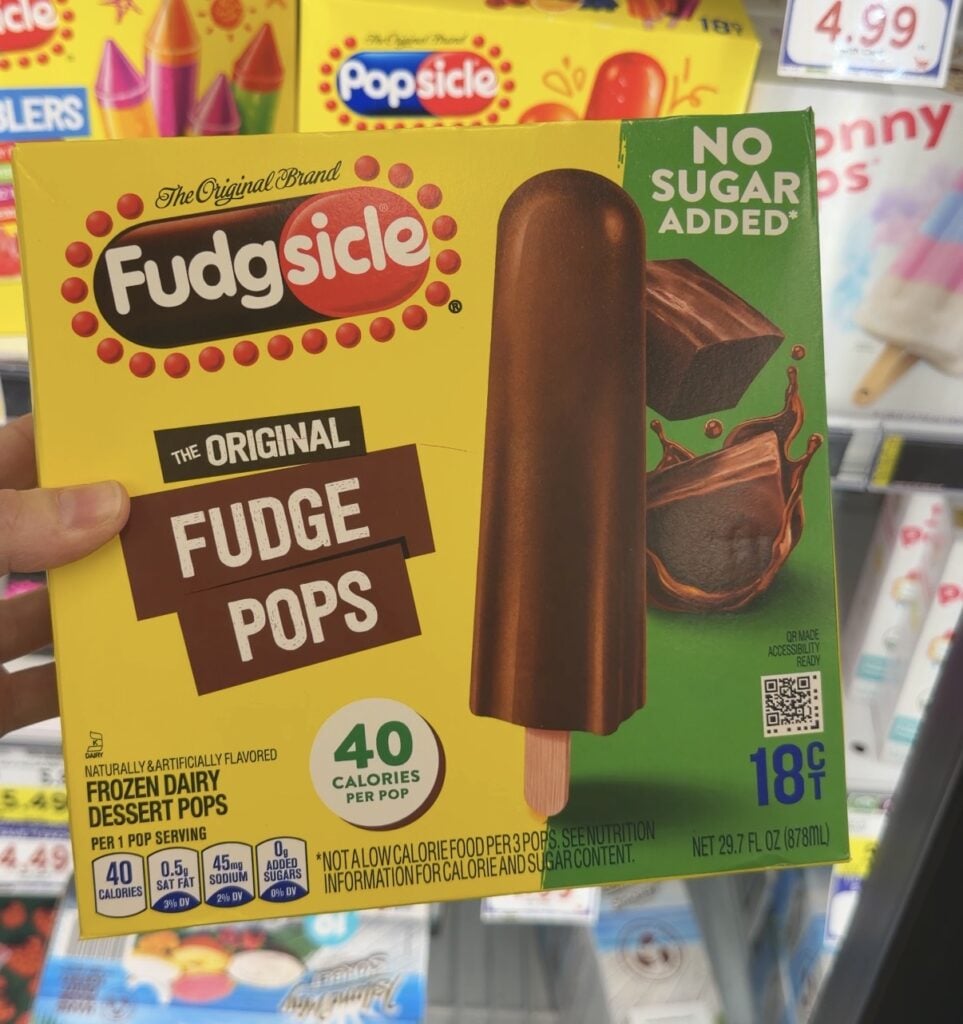
The post took off, and I think it’s because Fudgsicle pops look pretty innocent. Unless you know that barley contains gluten and carefully inspect the ingredient list, it would be easy to miss.
And that’s exactly the problem a new bill in Congress is trying to address.
The Problem With Gluten Labeling in the U.S.
Under current U.S. law, wheat is one of top nine major food allergens and must be clearly disclosed on FDA-regulated packaged foods. Barley and rye aren’t.
Yet gluten is found in wheat, barley, and rye, and all three must be avoided by people with celiac disease.
That means you can pick up a product, scan the bold “Contains” statement, see no wheat, and still have to search the entire ingredient list for barley, rye, malt, and other potential sources of gluten.
Fudgsicle is a perfect example.
The ingredient list includes malted barley extract, but because barley isn’t one of the top nine major allergens, the label isn’t required to scream CONTAINS BARLEY the way it would have to disclose wheat.
For those of us with celiac disease, that’s a pretty big labeling gap.
What Is the FASTER Act of 2026?
The Food Allergy Safety, Treatment, Education, and Research Act of 2026, or FASTER Act, was introduced in Congress in July 2026.
The bill proposes changing federal law so gluten-containing grains receive the type of clear disclosure currently required for major food allergens.
The proposed definition includes:
- Wheat
- Barley
- Rye
- Oats
- Crossbred hybrids of these grains, such as triticale
If passed, food manufacturers would have to clearly identify these grains when they’re present in packaged foods.
For someone with celiac disease standing in a grocery aisle trying to determine whether a product is safe, that’s a big deal.
Wait, Aren’t Oats Gluten-Free?
Yes, and this part of the bill deserves some explanation.
Under current FDA gluten-free regulations, oats are not considered a gluten-containing grain. Pure oats can be used in foods labeled gluten-free as long as the finished product meets FDA’s gluten-free requirements.
Oats are nevertheless included in the proposed FASTER Act definition. Oats present unique concerns for the celiac community because of their high risk of cross-contact with wheat, barley, and rye, and a subset of people with celiac disease may also react to avenin, the protein found in oats.
This is one important difference between the FASTER Act and another gluten-labeling bill currently before Congress.
What About the Celiac Safety Act?
If you’ve been following celiac advocacy, you may have heard about the Celiac Safety Act of 2026, which was introduced earlier this year.
The two bills share a major goal: making gluten-containing grains easier to identify on food labels.
The newer FASTER Act goes further in some respects, including specifically addressing oats and calling for additional federal work related to celiac disease research and data.
Regardless of which legislation ultimately advances, the fact that Congress is considering clearer gluten disclosure is a significant step forward for our community.
Why Does This Matter?
These bills matter because people with celiac disease shouldn’t have to become professional ingredient detectives.
We already know gluten isn’t limited to foods that obviously contain flour. It can show up in malt, sauces, seasonings, candies, cereals, frozen treats, and plenty of other unexpected places.
Clearer labeling wouldn’t eliminate our responsibility to read labels, but it could make it much easier to quickly identify foods containing grains we need to avoid.
And the United States is behind many other countries when it comes to this type of labeling. Numerous countries already require clearer disclosure of gluten-containing cereals.
Where Does the FASTER Act Stand Today?
As of August 2026, the FASTER Act of 2026 has been introduced in Congress, but it has not become law. That means nothing about food labeling has changed yet.
For now, people with celiac disease still need to carefully read ingredient lists and recognize less-obvious sources of gluten, particularly barley-based ingredients such as malt.
The Bottom Line
The Fudgsicle situation perfectly illustrates why this legislation matters. Most of us know to look for wheat. But should someone newly diagnosed with celiac disease automatically know that “malted barley extract” means gluten?
Probably not.
Until our labeling laws change, keep reading every label, every time. Even on the chocolate popsicles. 😅
AND this would help keep us safe with helpful friends that want to serve us food in their homes, but aren’t fully schooled in all those sneaky ingredients. It’s bad enough that the affected person must know this information, but it’s too much to expect EVERYONE to understand it.
Thank you! I was diagnosed with Celiac in 2007. Even though I know about barley, I probably would have eaten a fudgsicle without checking the ingredients. This Faster Act is sooooooo important. Thank you!